
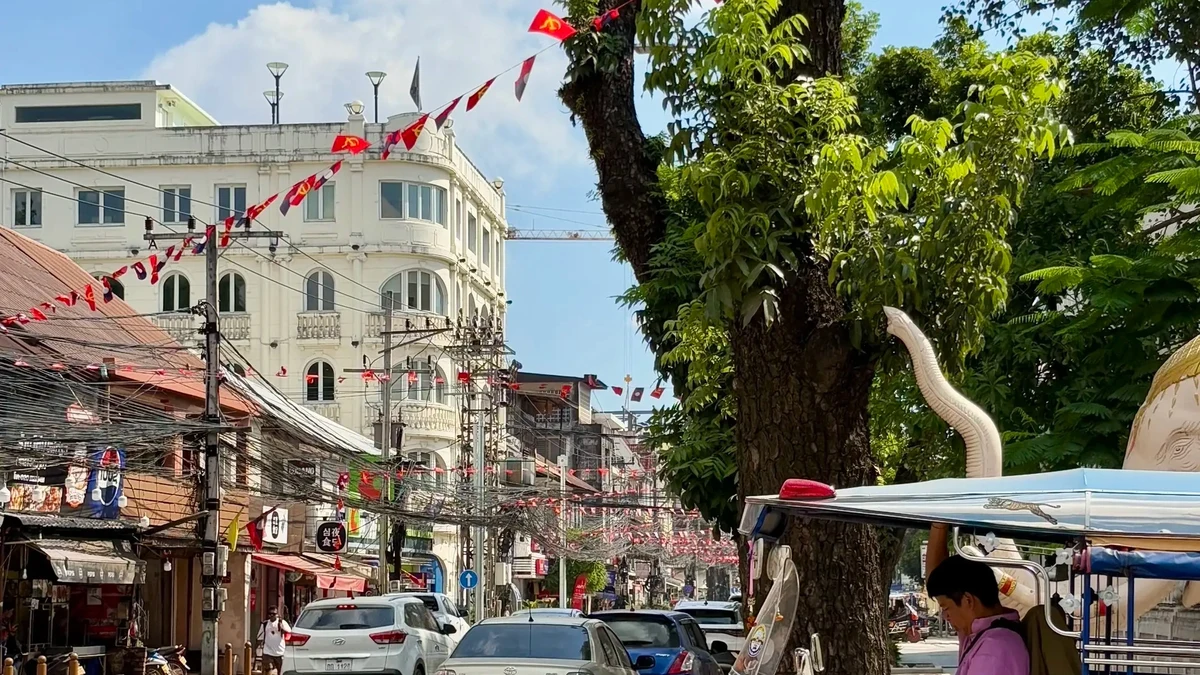

VIENTIANE, Laos — By late November, something subtle yet profound shifts in the air along the northern curve of the Mekong River. The heavy monsoon squalls that turn the dirt alleys of Laos into ochre clay have retreated. In their place arrives the dry season—bringing crisp morning temperatures of 19°C (66°F), brilliant cobalt skies, and a soft, dry breeze drifting down from the Annamite mountains.
While neighboring capitals like Bangkok and Hanoi spend December choking on gridlock and holiday commercial frenzy, Vientiane responds to the year’s end by doing what it does best: slowing down even further.
Here, strings of festive pennants flutter between century-old tamarind trees, tuk-tuk drivers nap barefoot in the shade of their three-wheelers, and the scent of strong French roast coffee and freshly baked baguettes drifts from quiet colonial shophouses.
If you are looking for the antidote to end-of-year burnout, this quiet riverside capital is Southeast Asia’s most peaceful sanctuary.
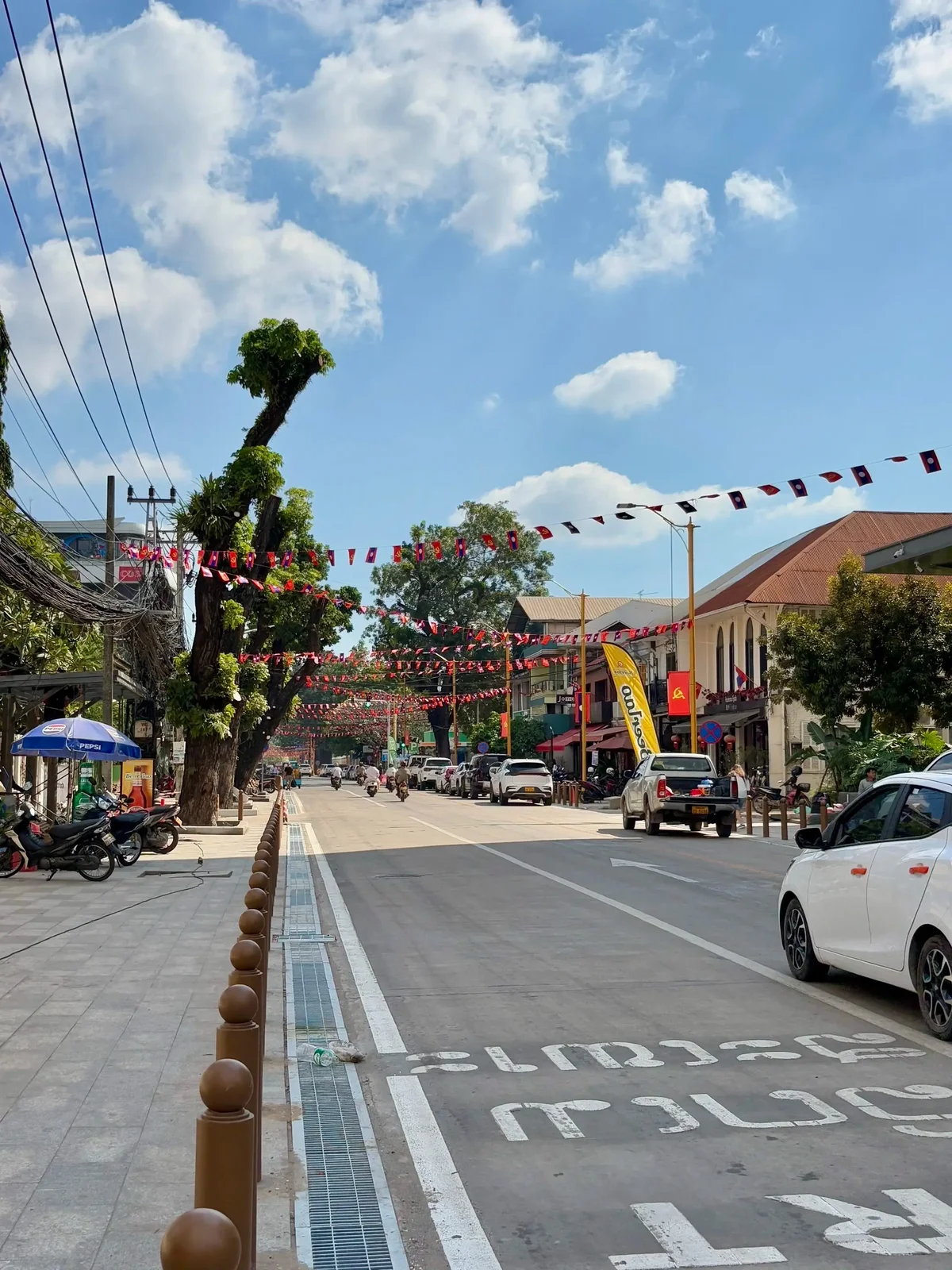
Dry-season sunshine over central Vientiane: wide, uncrowded boulevards adorned with festive garlands stretching beneath crisp blue skies.
1. The Season of Azure Skies and Red Banners
December is a ceremonial month in Laos. On December 2nd, the nation marks Lao National Day—commemorating the establishment of the republic in 1975.
As the date approaches, the capital dresses itself in celebration. Across avenues like Rue Setthathilath, Rue Samsenthai, and Lane Xang Boulevard, miles of overhead wires are strung with alternating flags:
- The national tricolor flag of Laos: a bold white full moon centered on a blue band, flanked by red borders.
- The historic red hammer-and-sickle party banners, fluttering against the leafy canopy.
Yet despite the political symbolism, the atmosphere on the street is remarkably gentle. There are no militaristic displays or blaring loudspeakers. Schoolchildren pedal past on vintage bicycles with baskets full of fresh French loaves, shopkeepers water their potted bougainvillea, and the afternoon sun warms the asphalt without the oppressive, sauna-like humidity of the summer months.
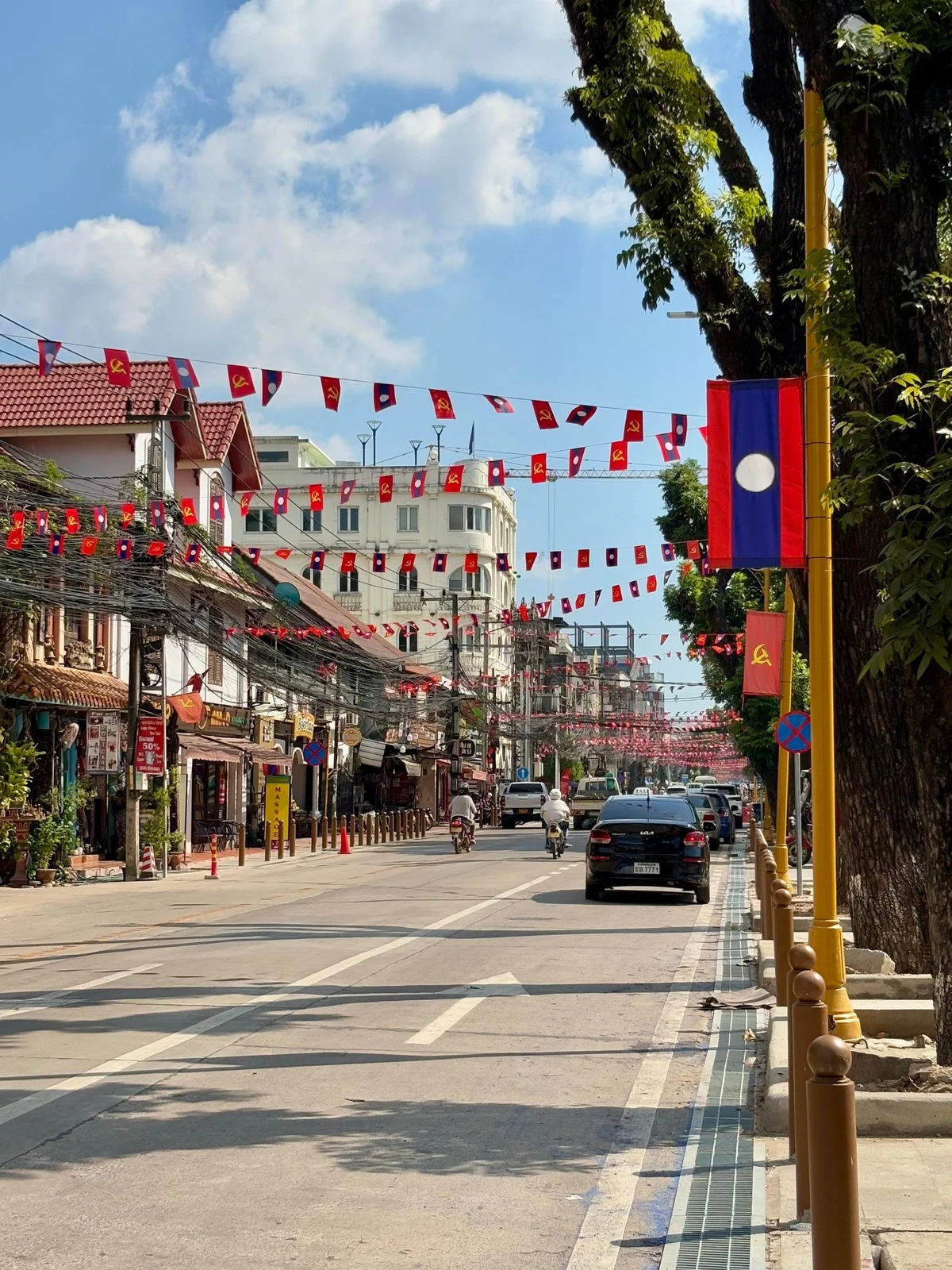
Festive pennants and national flags strung in parallel canopies across tree-shaded downtown avenues.
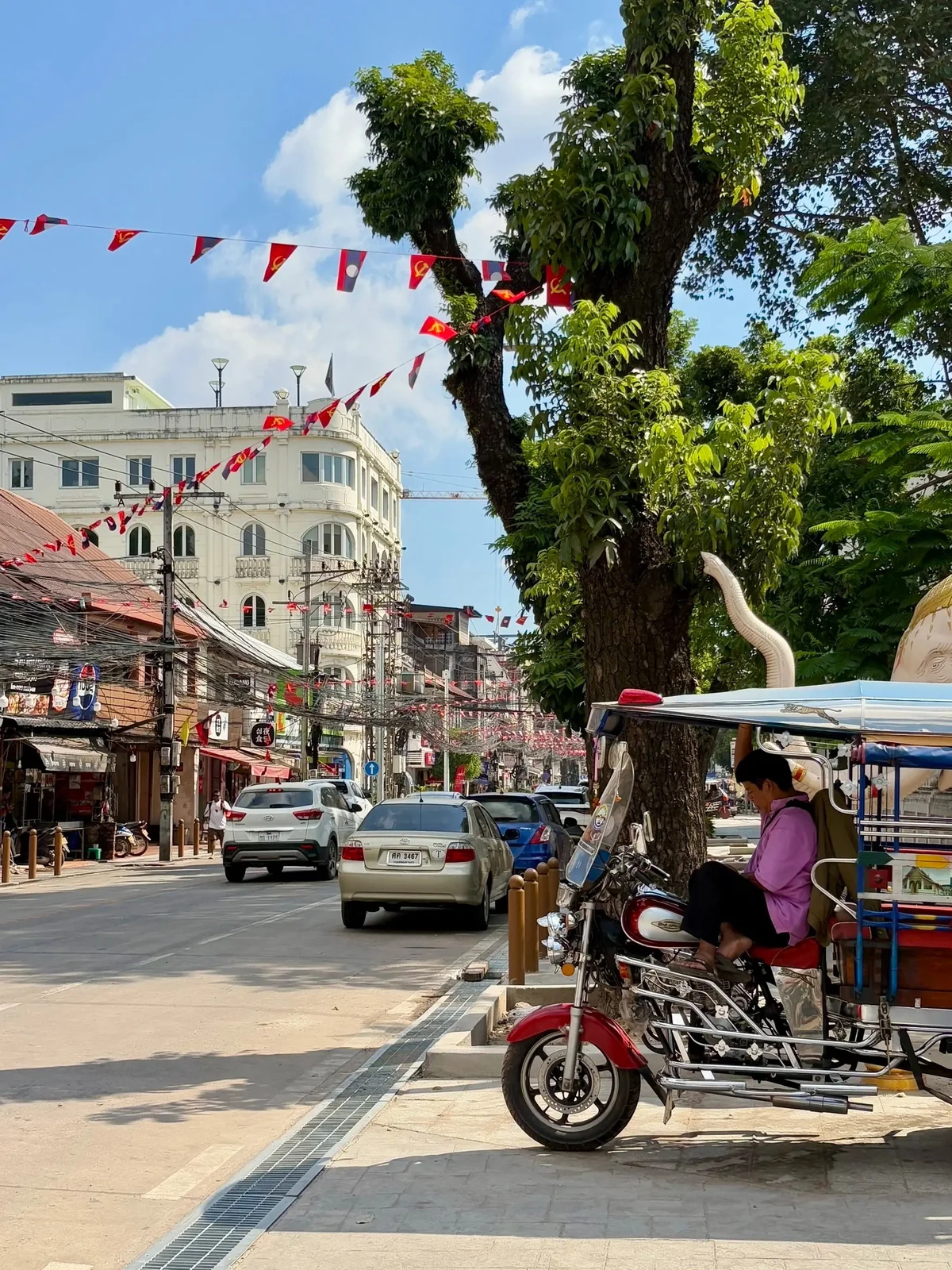
The essence of Vientiane street life: a jumbo driver lounging in the shade, embracing the national spirit of “Baw Pen Nyang.”
2. “Baw Pen Nyang”: A Civic Philosophy
Travelers conditioned by the frantic pace of Vietnam or Thailand often experience culture shock in Vientiane—not because things move too fast, but because they barely move at all.
Notice the driver pictured above, resting barefoot in the passenger carriage of his crimson three-wheeled jumbo (the Lao cousin of the Thai tuk-tuk). His motor is switched off. His phone sits casually on the seat. When foreign pedestrians stroll past, he does not leap up or aggressively yell “Tuk-tuk, sir! Where you go?!” He simply offers a faint nod and returns to watching the dappled leaves sway overhead.
This posture reflects the guiding philosophy of Lao daily life: “Baw pen nyang” (ບໍ່ເປັນຫຍັງ)—loosely translated as “It doesn’t matter,” “Don’t sweat it,” or “Never mind.”
In a world addicted to micro-deadlines and frantic hustle, year-end Vientiane reminds travelers that sitting quietly beneath a tree on a December afternoon is not wasted time; it is living properly.
3. Walking the Colonial Shophouses & Heritage Murals
With recent municipal improvements, Vientiane’s downtown core has laid down clean, paved granite sidewalks, installed cast-iron bollards, and clearly designated pedestrian crossings. During the winter dry season, walking through the historic quarters is an absolute pleasure:
- French-Indochinese Heritage: Two-story plaster villas painted in warm cream and ochre, with terracotta roof tiles and wooden shuttered balconies, sit alongside traditional Buddhist temple compounds.
- The Street Art of Preservation: Along street walls near cultural institutions, visitors encounter vibrant public mural projects like the AFCP (Ambassadors Fund for Cultural Preservation) installation. These murals illustrate the cultural bedrock of Laos: the mysterious stone urns of the Plain of Jars, delicate white Dok Champa (frangipani) blossoms, traditional silk weaving looms, and temple horn blowers celebrating ancient harvest rites.
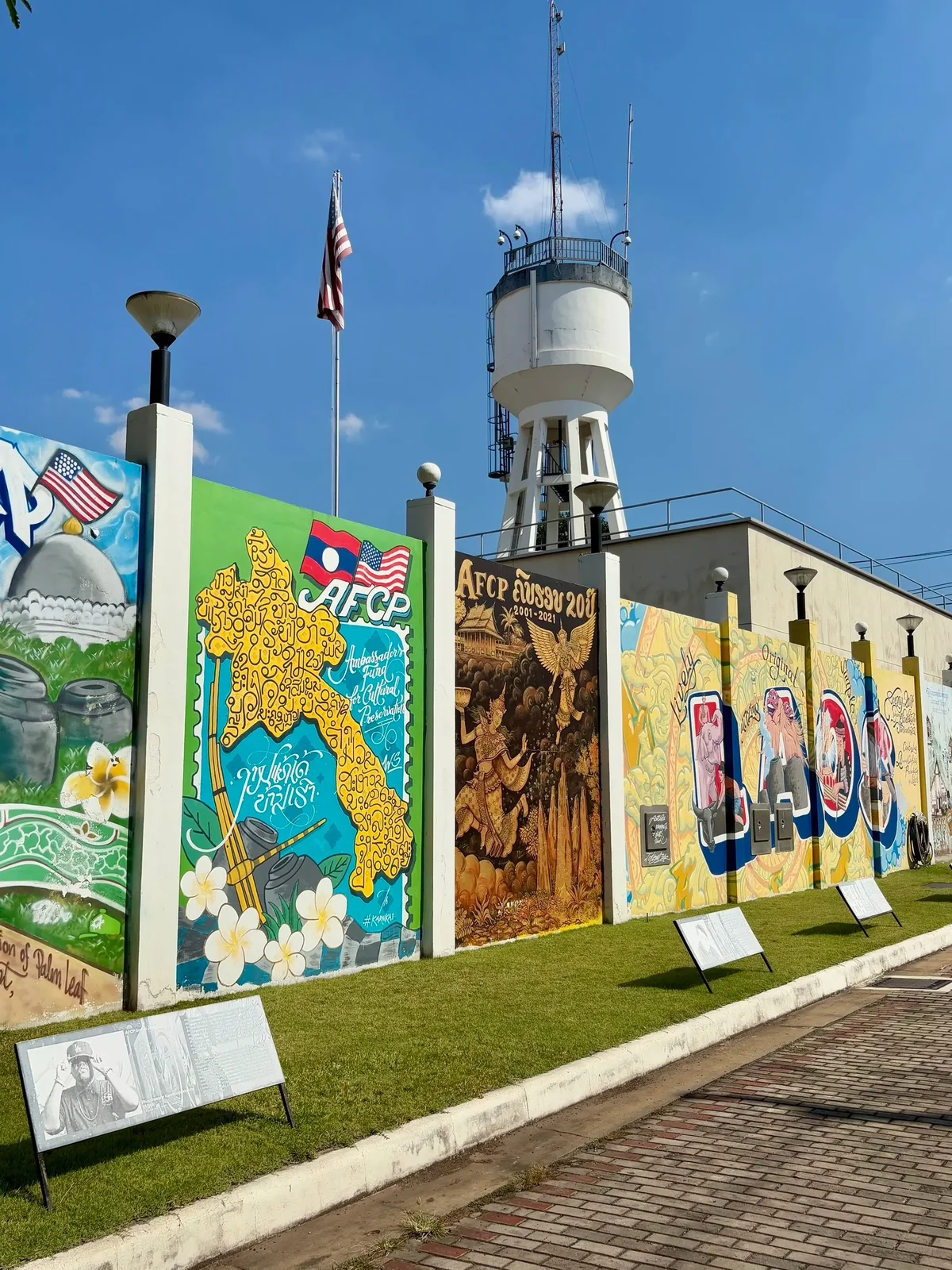
The AFCP cultural mural wall in Vientiane: celebrating indigenous music, silk craft, and the prehistoric Plain of Jars.
4. Modern Crossroads in Low Gear
Even at its busiest commercial junctions—such as the circular rotunda near the central banking district and the Nam Phou fountain—Vientiane refuses to lose its composure.
Giant curved digital billboards display advertisements in the elegant, rounded loops of the Lao alphabet, promoting cold Pepsi and local mobile banking apps. Yet at the intersection, there are no chaotic traffic swarms, no cutting off of pedestrians, and virtually no horn-honking. Drivers yield with polite patience, pickup trucks cruise at 30 km/h, and the whole city moves with the quiet dignity of a large rural town dressed up as a national capital.
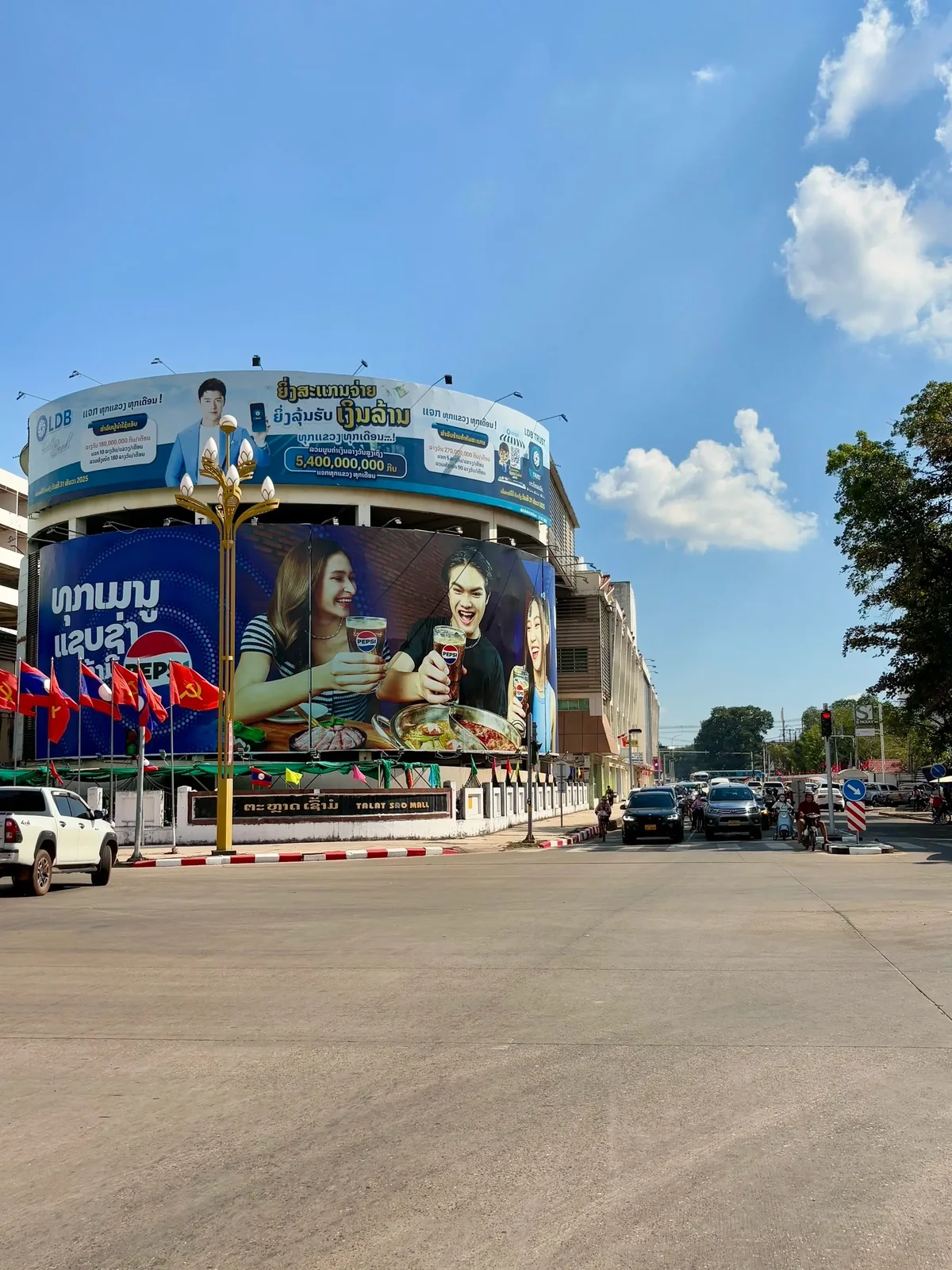
A modern commercial crossroads in downtown Vientiane: contemporary commerce coexisting with clean streets and gentle traffic.
5. The Traveler’s Winter Field Guide to Vientiane
If you find yourself in Vientiane during the year-end dry season, structure your days to sync with the city’s low-key cadence:
Morning: The Temple & Coffee Routine (7:00 AM – 10:30 AM)
- Wake up early to catch the crisp morning air. Stroll along Rue Setthathilath to witness monks collecting morning alms (Tak Bat), then duck into a local cafe for Kaafeh Yen (rich, Robusta Lao dark coffee brewed through a cloth sock and layered with sweet condensed milk).
- Pair your brew with a warm Khao Jee (a crusty French baguette split and filled with pate, fresh cilantro, chili paste, and pickled papaya)—a delicious legacy of the French colonial era.
Midday: The Art of the Long Lunch (11:30 AM – 2:30 PM)
- Even in winter, the midday sun can be piercing. Do as the locals do: step off the street.
- Savor a steaming bowl of Khao Piak Sen (chewy fresh tapioca-rice noodles in fragrant chicken or pork broth with fried shallots) at a shaded shophouse, followed by an hour of unhurried reading or journaling.
Afternoon: Riverfront Stroll & The Mekong Sunset (4:30 PM – 7:00 PM)
- By 4:30 PM, the late afternoon sun casts long, amber shadows across the avenues. Head down to Chao Anouvong Park along the wide river embankment.
- As the orange sun plunges directly behind the palm trees of the Thai riverbank on the opposite shore, the Vientiane Night Market springs to life. Pull up a red plastic stool, order a salt-crusted grilled tilapia (Pa Ping), a basket of warm sticky rice (Khao Niew), and an ice-cold bottle of Beerlao.
The Verdict
Travelers often complain that Vientiane lacks the dramatic temples of Angkor Wat or the high-octane nightlife of Bangkok.
They are missing the point. Vientiane’s magic is not found in blockbuster tourist attractions; it is found in the spaces between them. In the gentle winter breeze that sets the red flags fluttering, in the quiet dignity of its people, and in the rare, priceless luxury of being allowed to slow down.