

BANGKOK, Thailand — To truly understand Thailand, you have to eat your way through it. Here, food is not merely sustenance; it is a national passion, an all-day social ritual, and a sensory masterclass in balancing four opposing forces: sweet, sour, salty, and fiery heat.
While high-end Bangkok bistros win international accolades, the beating heart of Thai culinary culture remains in its street stalls, canal-side noodle shacks, and family-run shophouses. From the frantic, bowl-stacking energy of Bangkok’s Victory Monument to the fragrant, slow-simmered coconut curries of Chiang Mai, here is the ultimate, unfiltered field guide to eating like a local across Thailand.
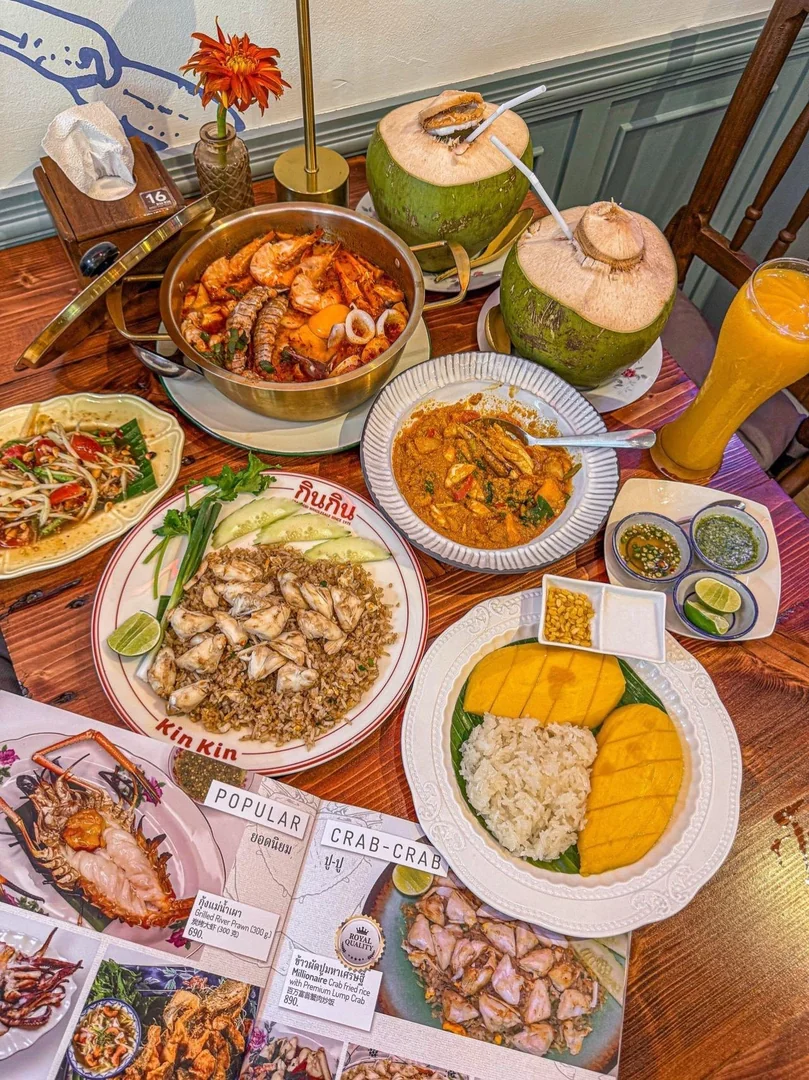
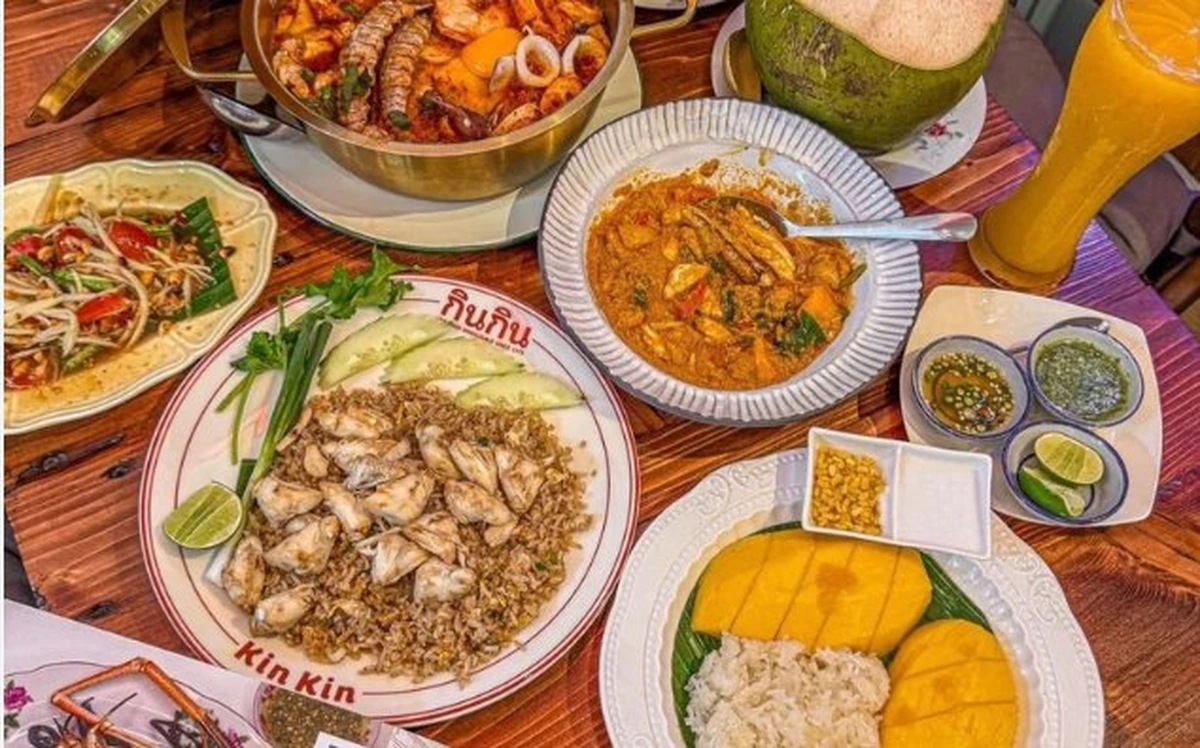
The ultimate Thai feast at Kin Kin: “Millionaire Crab” fried rice with jumbo lump crab meat, creamy seafood Tom Yum, and sweet mango sticky rice.
1. Bangkok’s 16-Baht Canal Tradition: The Boat Noodle Challenge
Tucked along the narrow canal banks north of Bangkok’s bustling Victory Monument lies Boat Noodle Alley—home to institutions like Anong Noodles (ร้านอนงค์ ก๋วยเตี๋ยวเรือ).
Historically, Kuay Teow Reua (boat noodles) were sold from tiny wooden sampans paddling through Bangkok’s waterways. To prevent scalding hot soup from splashing into the canal as boats bobbed against the docks, vendors served noodles in petite, palm-sized bowls containing just two or three mouthfuls.
Today, the boats have largely moved to waterside counters, but the tradition of stacking empty ceramic bowls remains an essential Bangkok ritual:
- The Broth: Intensely dark, rich, and fragrant, brewed for hours with cinnamon, star anise, morning glory (pak boong), and seasoned with pig’s blood for a velvety, savory depth that cannot be replicated.
- The Routine: Order five or six bowls at once—alternating between tender braised beef, minced pork, and bouncy meatballs—topped with crispy fried wonton skins and paired with a tall cup of iced Thai milk tea from 7-Eleven. At roughly 16 to 20 Thai Baht ($0.50 USD) per bowl, it is one of the most thrilling culinary bargains in Southeast Asia.
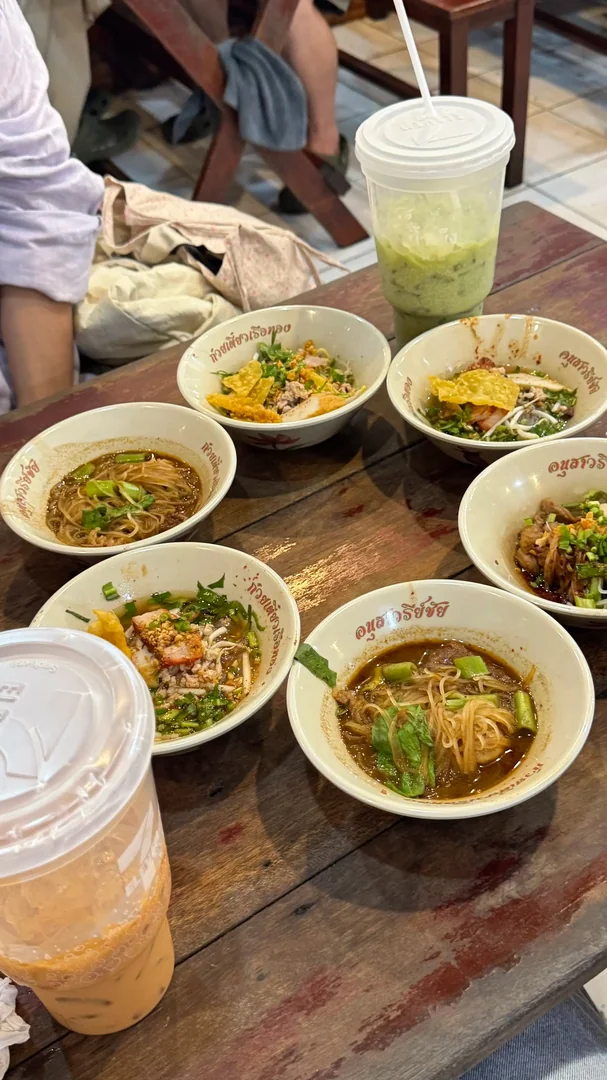
The Victory Monument stack: palm-sized bowls of rich pork blood broth and springy rice noodles.
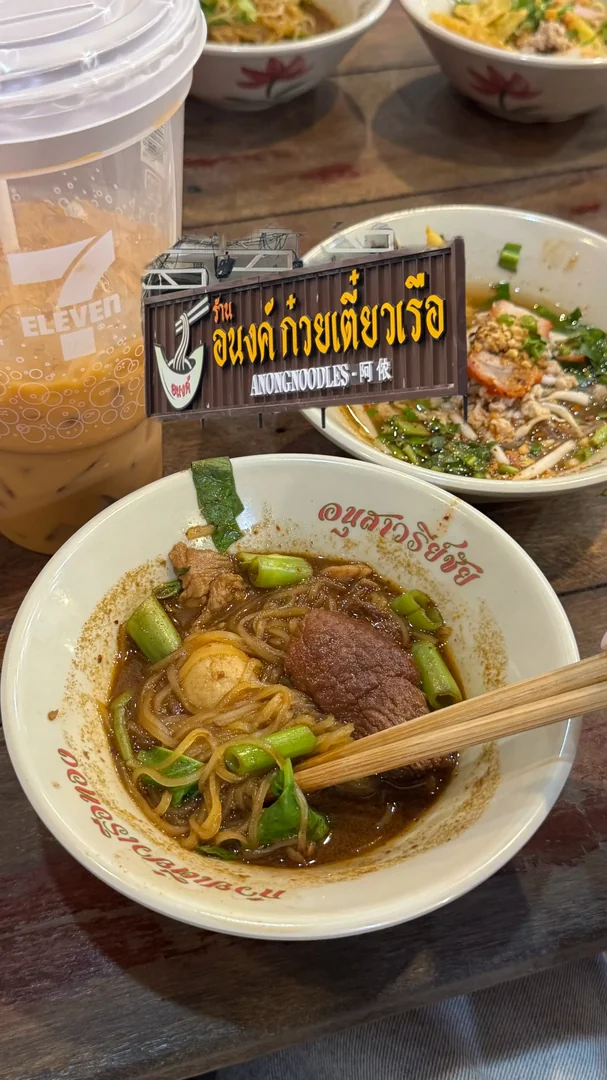
Up close at Anong Noodles: tender braised beef, morning glory, and an intensely spiced herbal broth.
2. The Seafood Splurge: “Millionaire Crab” and Fiery Tom Yum Pots
When Bangkok locals want to celebrate, they head toward dedicated seafood houses like Kin Kin to feast on Gulf of Thailand ocean harvests:
- Khao Pad Poo (Millionaire Crab Fried Rice): Forget the shredded crab flakes found in hotel buffets. Authentic high-end crab fried rice (Khao Pad Poo Maha Setthi) arrives piled with colossal, intact morsels of pure white jumbo lump blue crab meat (เนื้อปูก้อน). Wok-tossed over screaming heat for that essential smoky wok hei, it is eaten with a squeeze of fresh lime and a spoonful of prik nam pla (fish sauce infused with raw bird’s eye chilies and garlic).
- The Giant Tom Yum Mama Pot: A golden brass cauldron brimming with river prawns (kung mae nam), sweet mantis shrimp (kung kang), fresh squid rings, and crab claws submerged in a rich, citrus-spiked lemongrass broth. A raw egg yolk is cracked right into the center—when whisked into the hot broth alongside wavy Mama noodles, it creates a luxurious, velvety emulsion that balances the sharp lime juice and roasted chili paste (nam prik pao).
- Poo Pad Pong Karee: Tender crab meat smothered in a rich, silky yellow curry gravy enriched with eggs, evaporated milk, and fresh spring onions.
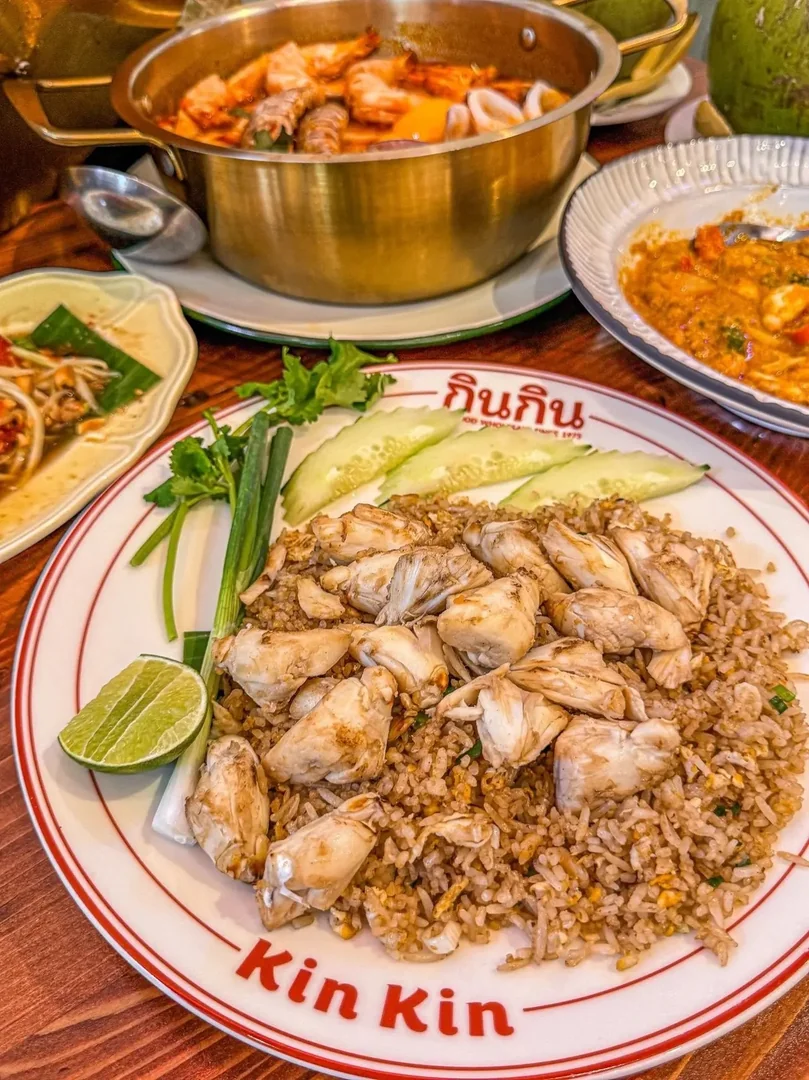
Colossal chunks of fresh jumbo lump blue crab atop smoky, golden jasmine fried rice.
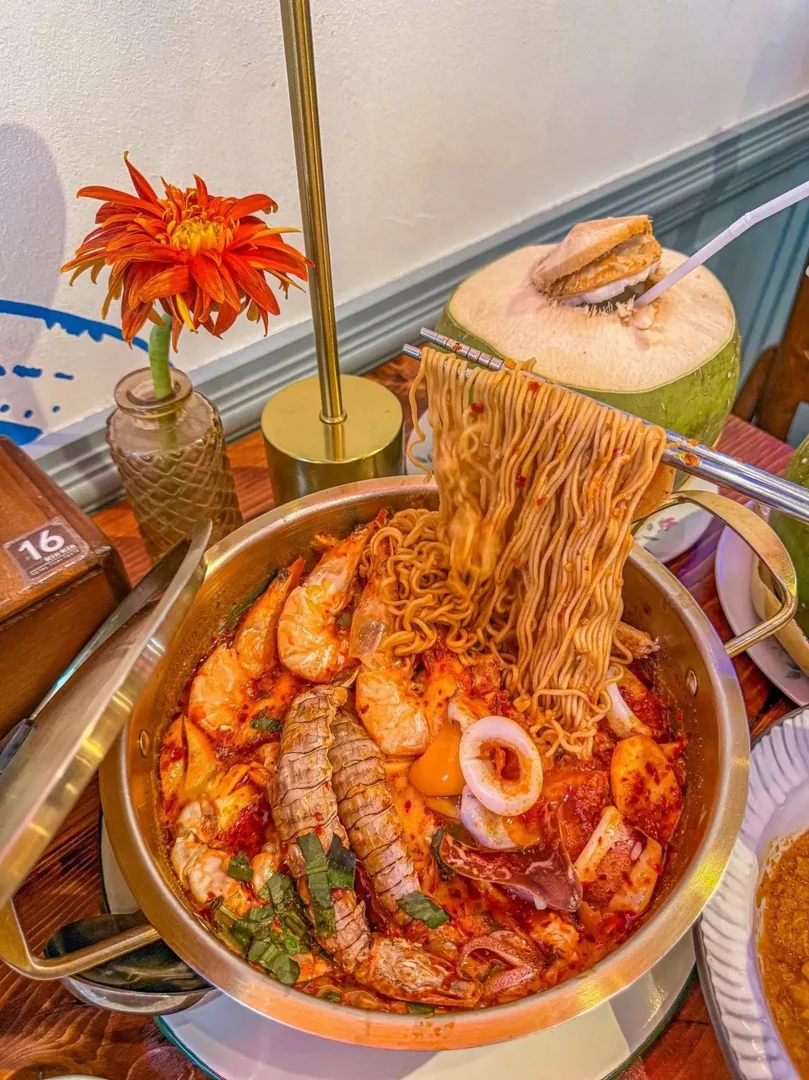
Lifting noodles from the fiery brass cauldron of Tom Yum seafood and sweet mantis shrimp.
3. The Everyday Comfort Table: Holy Basil, Pad Thai & Isan Grills
Step into neighborhood mainstays like Ros’niyom (รสนิยม) or any open-air corner eatery, and you will see the everyday pillars of Thai domestic comfort:
- Pad Kra Pao Moo Saap: The undisputed king of Thai fast food. Finely minced pork flash-fried with crushed garlic, raw bird’s eye chilies, and generous handfuls of peppery Thai holy basil (bai krapow). It must always be ordered with a Khai Dao—a fried egg cooked in shallow, bubbling oil so the edges crisp into lacy golden ruffles while the yolk remains liquid and rich.
- Pad Thai with Fresh Banana Blossom: Real street-level Pad Thai is a delicate balance of sweet tamarind pulp, dried baby shrimp, yellow tofu cubes, and toasted crushed peanuts, served alongside crunchy raw bean sprouts and a wedge of astringent fresh banana flower.
- Gai Yang (Isan Marinated Grilled Chicken): Hailing from the northeastern Isan region, whole chickens are marinated in crushed coriander roots, garlic, lemongrass, and black pepper, then slow-grilled over charcoal until the skin crisps into mahogany sheets. Paired with Nam Jim Jaew (a smoky dipping sauce made of toasted sticky rice powder, lime, and dried chili flakes) and a sizzling platter of stir-fried morning glory (Pad Pak Boong Fai Daeng), it is culinary perfection.
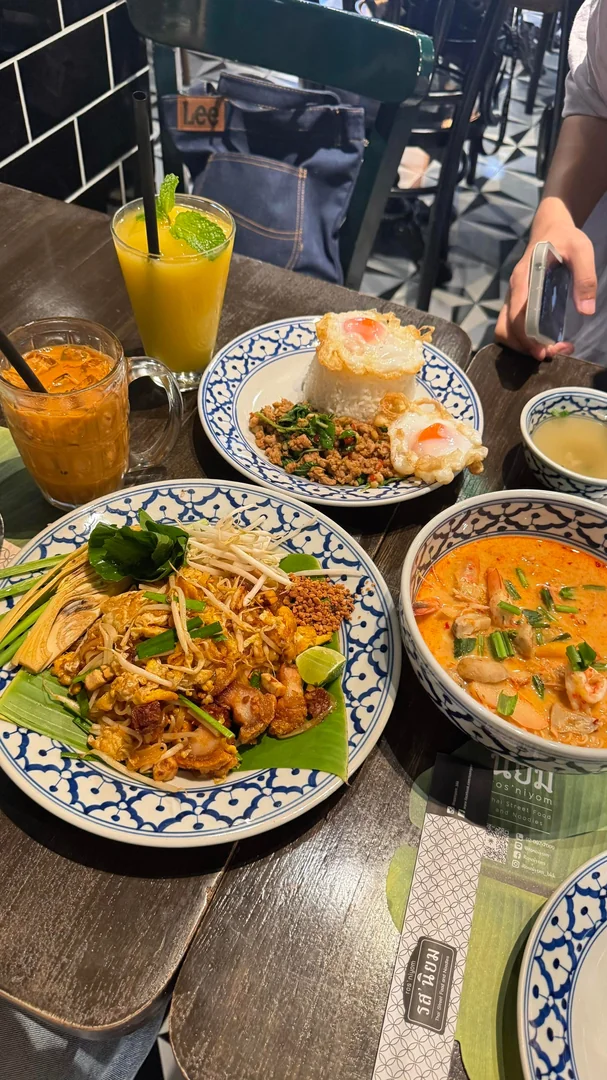
The holy trinity of Thai comfort food: Pad Kra Pao with crispy fried eggs, classic Pad Thai, and iced Cha Yen.
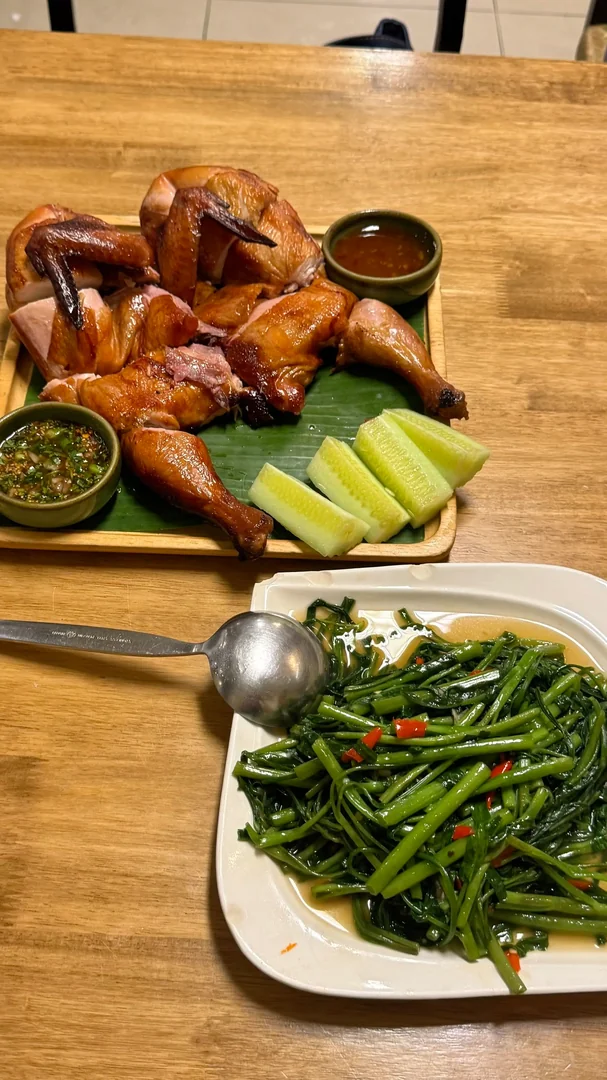
Charcoal-roasted Gai Yang chicken with spicy tamarind dipping sauce and garlic morning glory.
4. Northern Comfort in Chiang Mai: The Magic of Khao Soi
Travel 700 kilometers north into the cool mountains of Chiang Mai, and the culinary personality shifts noticeably. Gone are the aggressive lime acids of central Bangkok; Northern Lanna cuisine is richer, earthier, and subtly spiced.
Nowhere is this clearer than at Kao Soy Nimman (ข้าวซอยนิมมาน) in Chiang Mai’s artsy Nimman district:
- The Anatomy of Khao Soi: Influenced by historical Yunnanese Muslim caravan traders, this iconic dish features flat, tender egg noodles bathed in a slow-simmered, aromatic coconut-curry broth flavored with turmeric, cardamom, and coriander seeds.
- The Texture Crown: The soup is crowned with a crunchy nest of deep-fried crispy noodles, creating an unforgettable interplay of creamy broth and satisfying crunch.
- The Essential Condiments: A bowl of Khao Soi is never complete without its side plate of raw shallots, lime wedges, and pickled mustard greens (phak kat dong). Squeezing fresh lime and stirring in the pickled greens cuts through the rich coconut cream, balancing the dish into pure harmony.
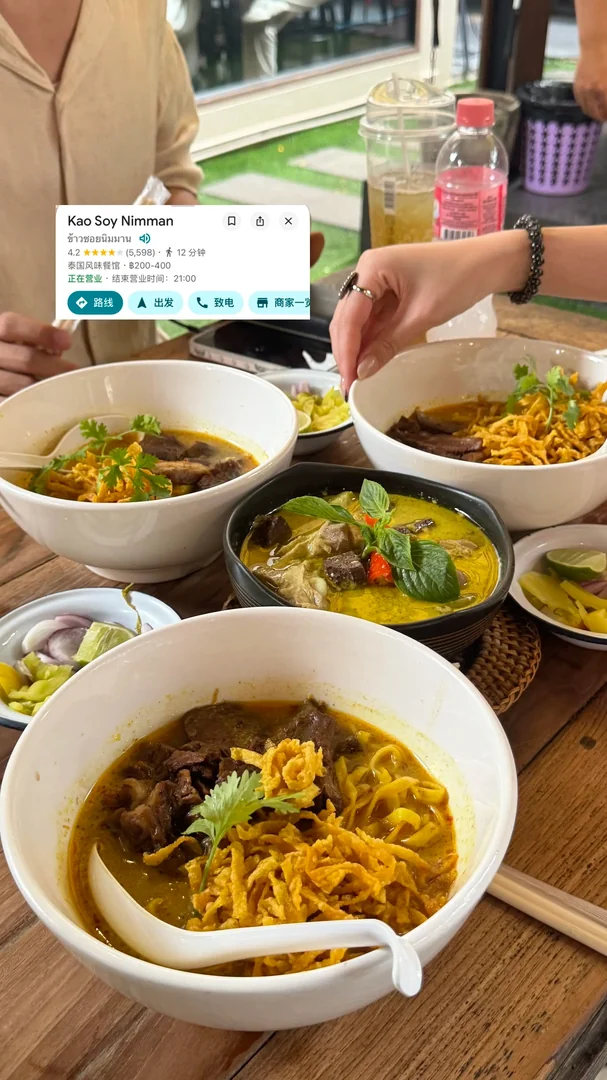
Lunch at Kao Soy Nimman in Chiang Mai: bowls of rich coconut curry noodles crowned with deep-fried crispy ribbons and pickled mustard greens.
5. Night Market Confections: From Mango Sticky Rice to Khanom Babin
No evening in Thailand is finished without wandering through a bustling night market, where the air smells of caramelized coconut, toasted sesame, and sizzling batter:
- Khao Niao Mamuang (Mango Sticky Rice): The undisputed national dessert. High-grade Nam Dok Mai or Ok Rong mangoes—soft, fragrant, and honey-sweet—sliced over warm glutinous rice that has been steeped in sweetened coconut milk. Drizzled with warm salted coconut cream and sprinkled with crunchy toasted mung beans, it hits every textural note.
- Khanom Babin (Old-School Coconut Pancakes): One of Thailand’s most underrated street delicacies. Made from a batter of glutinous rice flour, coconut milk, and generous strips of fresh young coconut meat, these cakes are pan-grilled on flat griddles until the exterior forms a chewy, caramelized crust while the center stays gooey and fragrant with coconut juice.
- Night Market Fritters: Wire racks lined with freshly fried golden cheese balls (cheeseball), crispy shrimp patties (kung thod), and crunchy chicken tenders—served hot in paper bags with sweet chili dip.
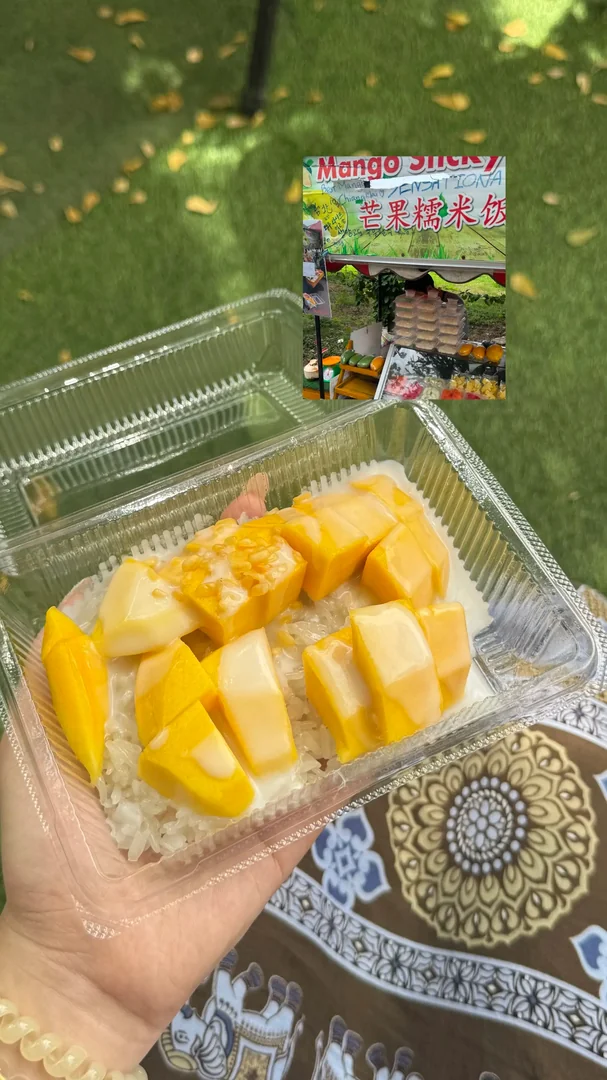
Street-side Mango Sticky Rice from Chiang Mai: chilled golden mango cubes drenched in warm, salted coconut cream.
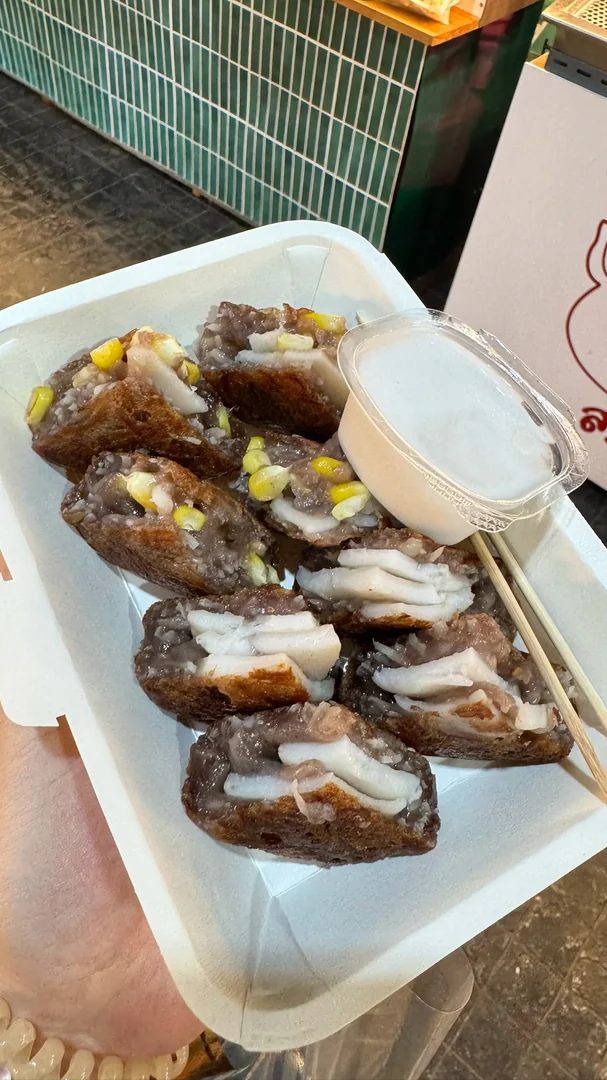
Warm Khanom Babin: chewy, caramelized coconut pancakes embedded with sweet corn and tender strips of young coconut.
6. Practical Field Rules for Eating in Thailand
To get the most out of your culinary exploration without gastrointestinal regrets, keep these simple rules in mind:
- How to Manage the Spice: If you cannot handle intense heat, say “Mai phet” (not spicy) or “Phet nit noi” (just a little spicy). Leaving it unsaid means the cook will prepare it at normal Thai heat—often incorporating three to five fresh bird’s eye chilies per plate.
- The Ice Truth: Travelers often fear drinking iced drinks. In Thailand, ice cubes with hollow cylindrical holes (nam khaeng lord) come from certified commercial ice factories and are completely safe to consume. Street carts and restaurants order bags delivered daily.
- Carry Cash for Carts: While upscale dining accepts credit cards, traditional boat noodle counters, night market stalls, and dessert vendors only accept cash or local Thai bank transfers (PromptPay). Keep small bills (20, 50, and 100 Baht) ready.