
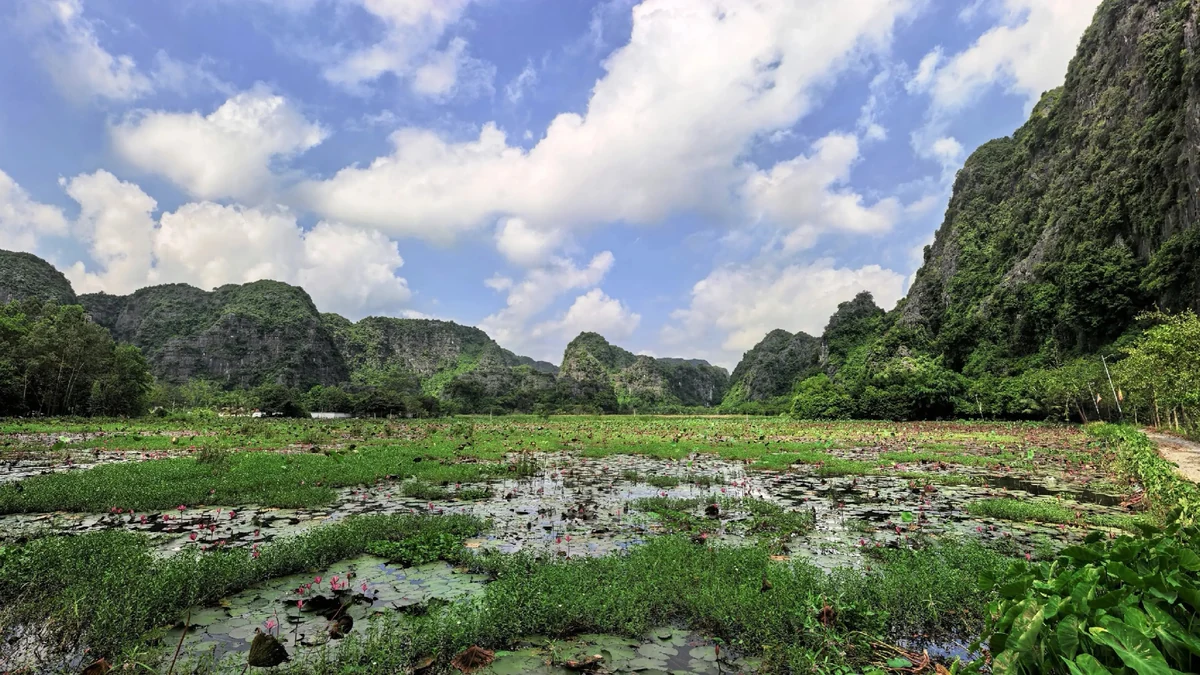

NINH BINH, Vietnam — Often celebrated in guidebooks as “Ha Long Bay on land”, the UNESCO-inscribed river plains of Ninh Binh represent one of Northern Vietnam’s most dramatically sculpted landscapes. Here, ancient karst monoliths erupt vertically from lush emerald river corridors, punctuated by natural water-cut tunnel caves and centuries-old pagodas.
Yet, as international tourism surges post-pandemic, the reality on the ground has become increasingly polarized. Between tranquil early-morning paddling and midday tourist bottlenecks, visiting Ninh Binh today is an experience of stark contrasts.
Here is an unvarnished, field-tested report from three days exploring Trang An, Tam Coc, Hang Mua, and the surrounding countryside as a first-time visitor from Europe.
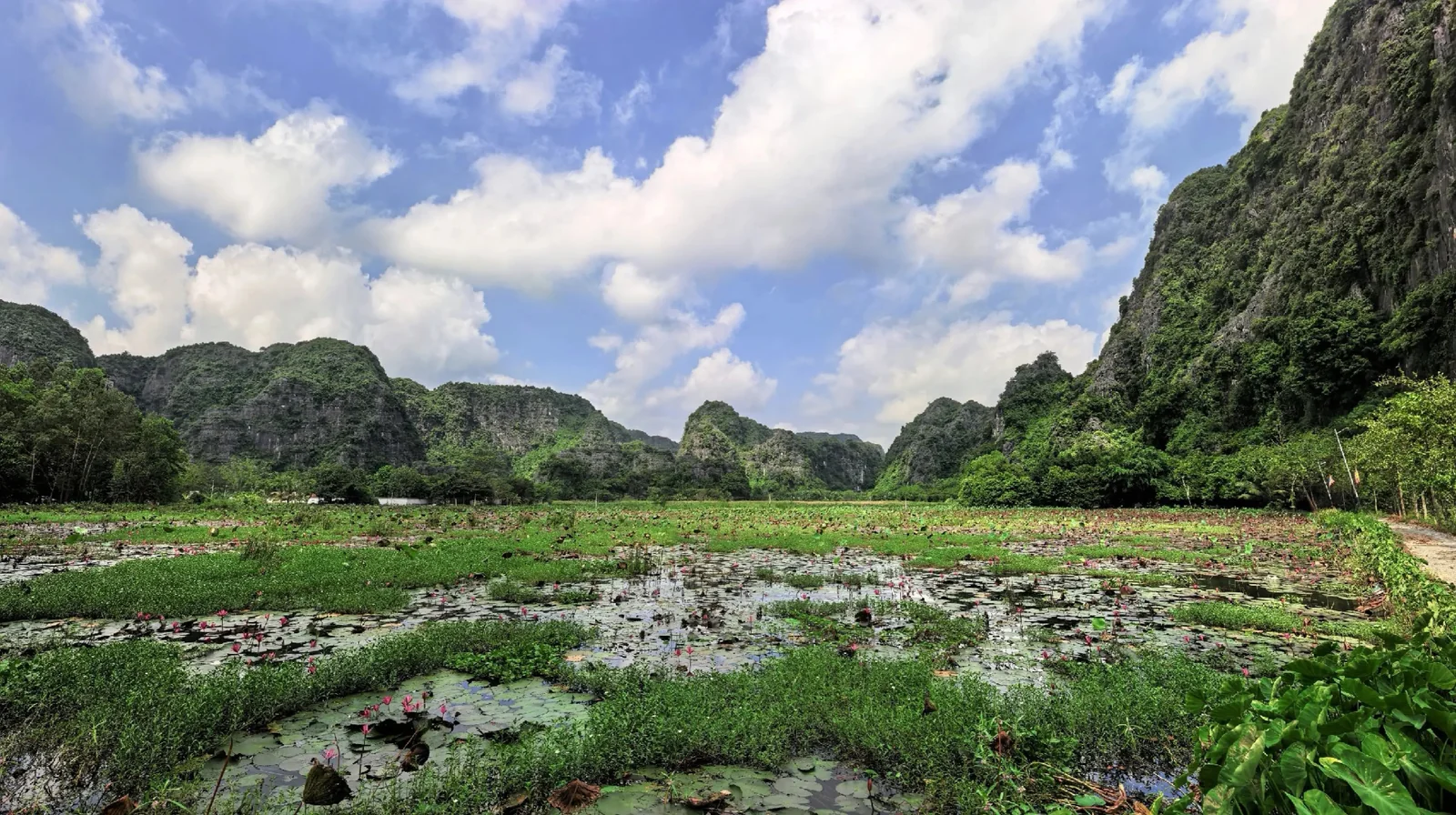
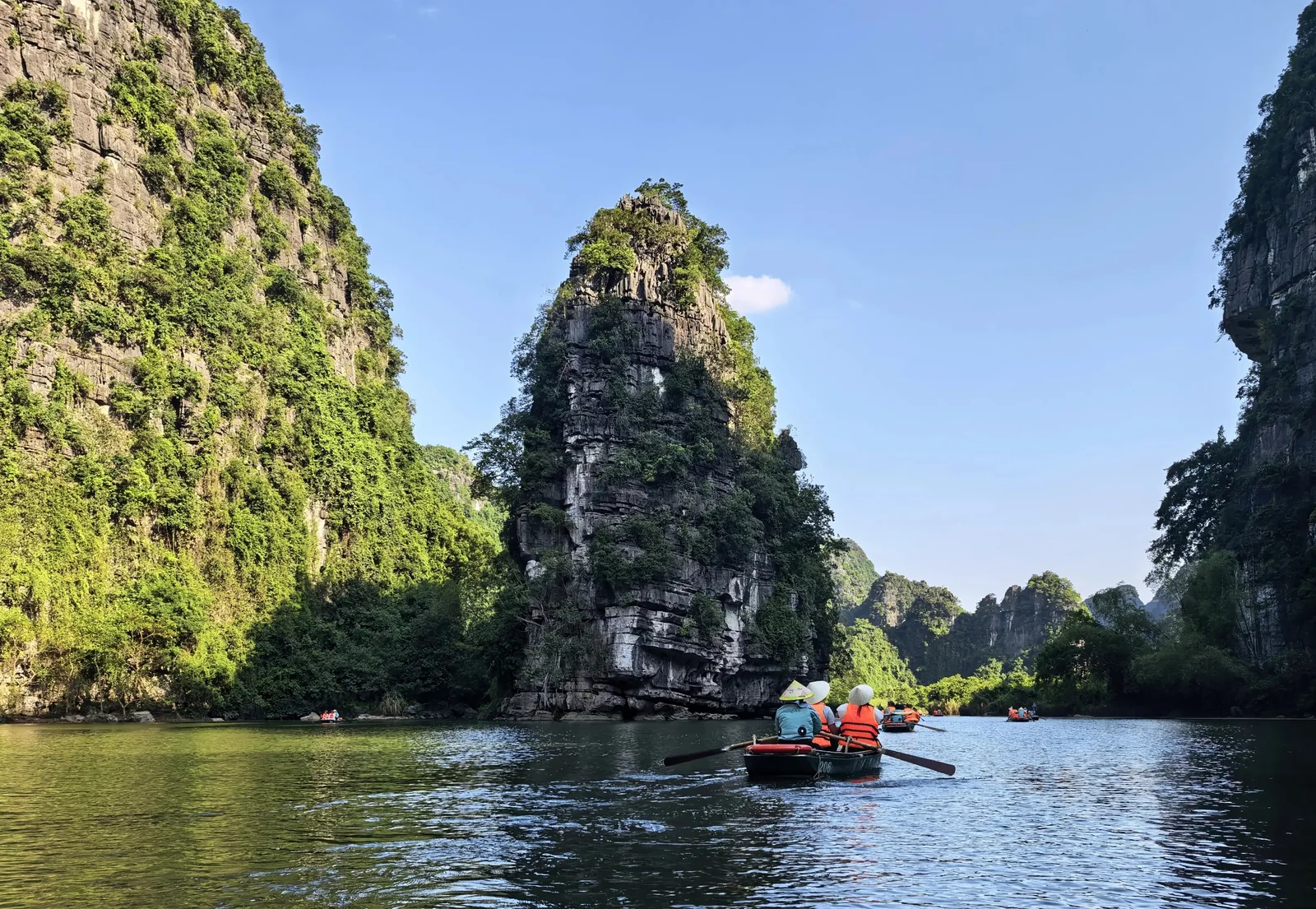
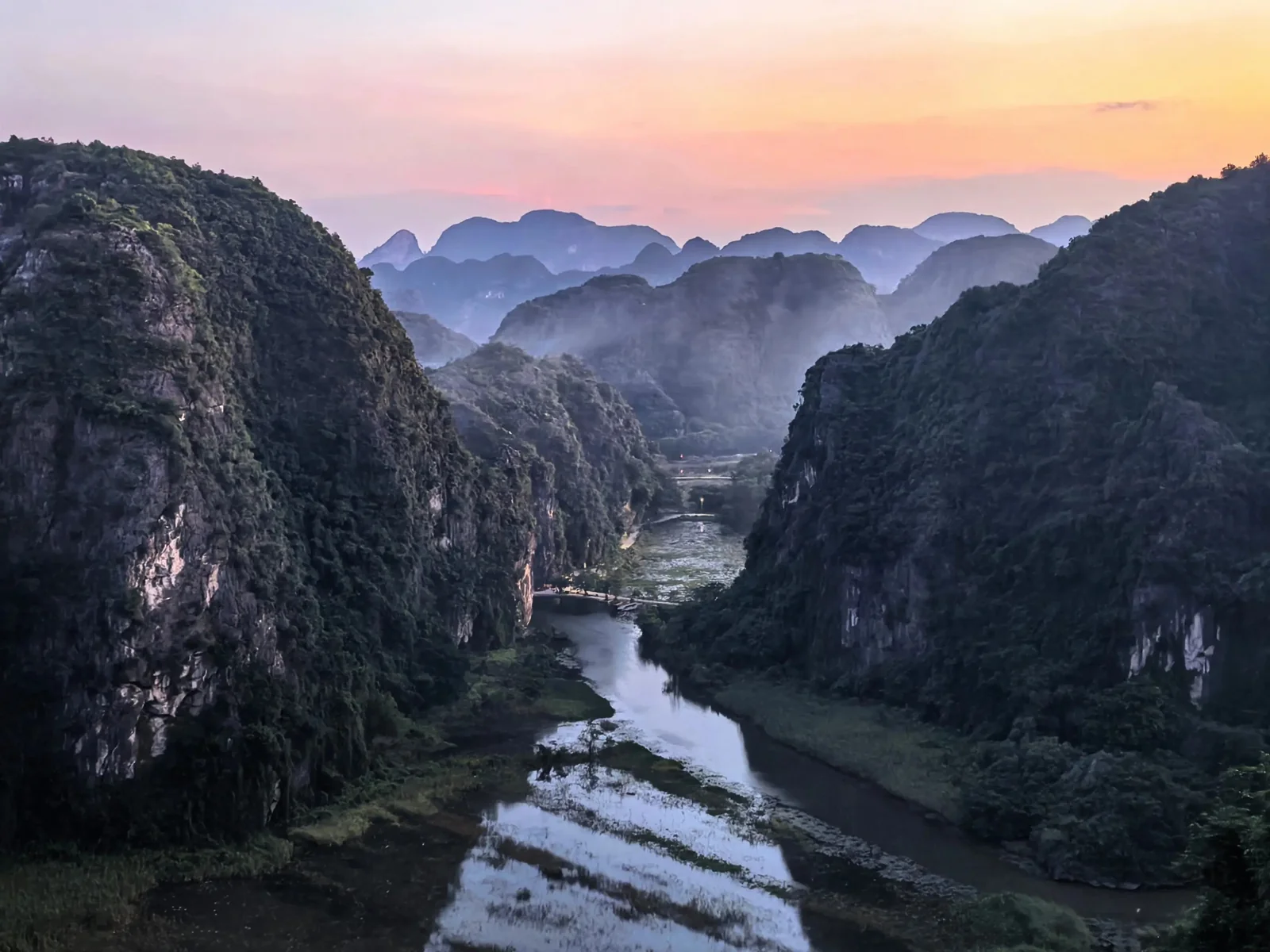
Trang An Scenic Landscape Complex: ancient limestone massifs rising dramatically above winding river channels in Ninh Binh.
1. What Genuinely Delivers: Natural Majesty & Village Solitude
The Trang An River Route: Silent Grottoes and Foot-Rowing Mastery
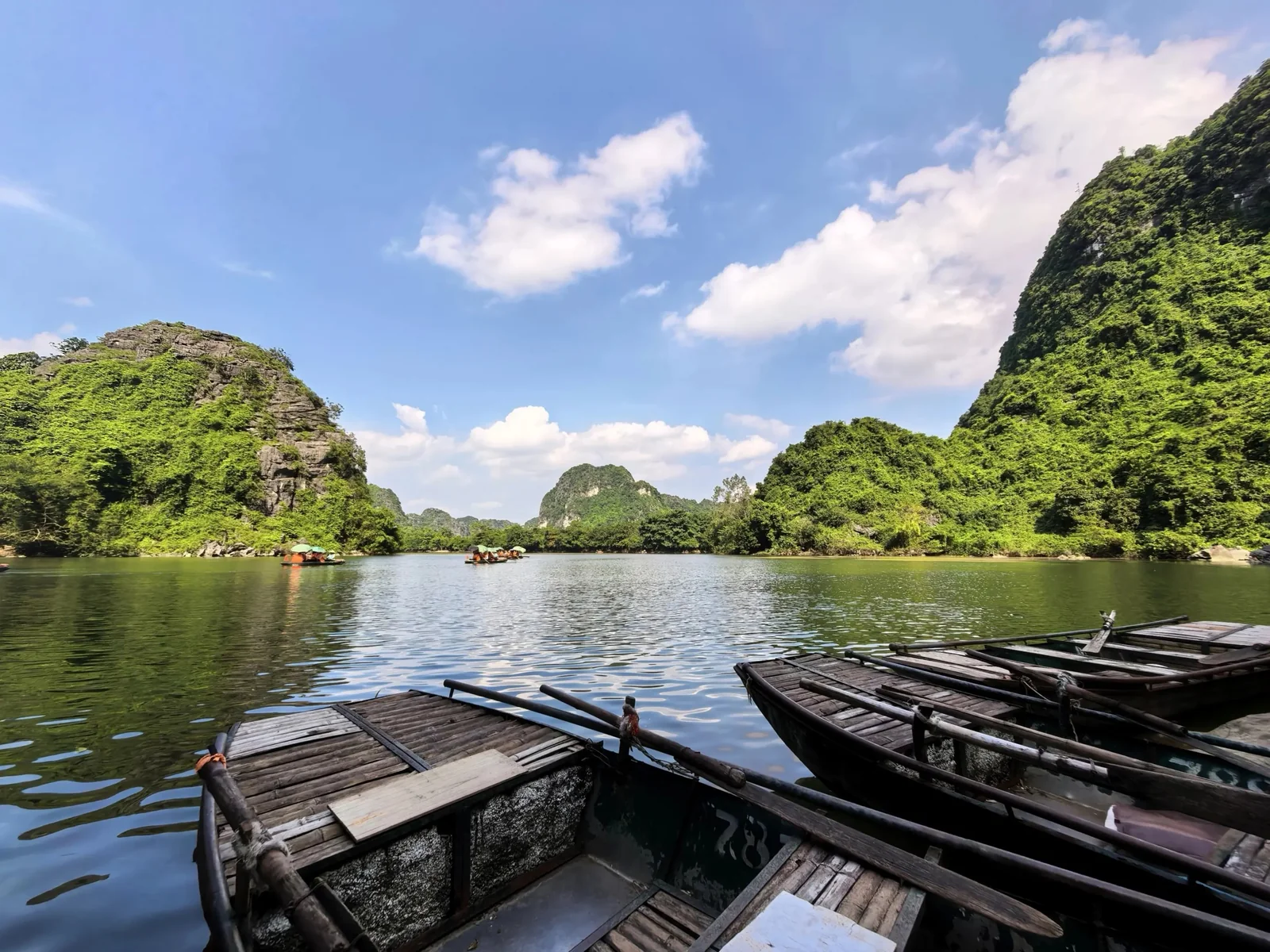
The headline attraction of Ninh Binh is its network of water-based river routes. Opting for Trang An rather than Tam Coc yields a far more expansive experience: 2.5 hours gliding through six natural subterranean limestone caves.
Navigating through these low-ceiling cavern chambers—where rowers duck beneath prehistoric stalactites in near-complete darkness before emerging into sunlit, secluded karst valleys—feels genuinely otherworldly.
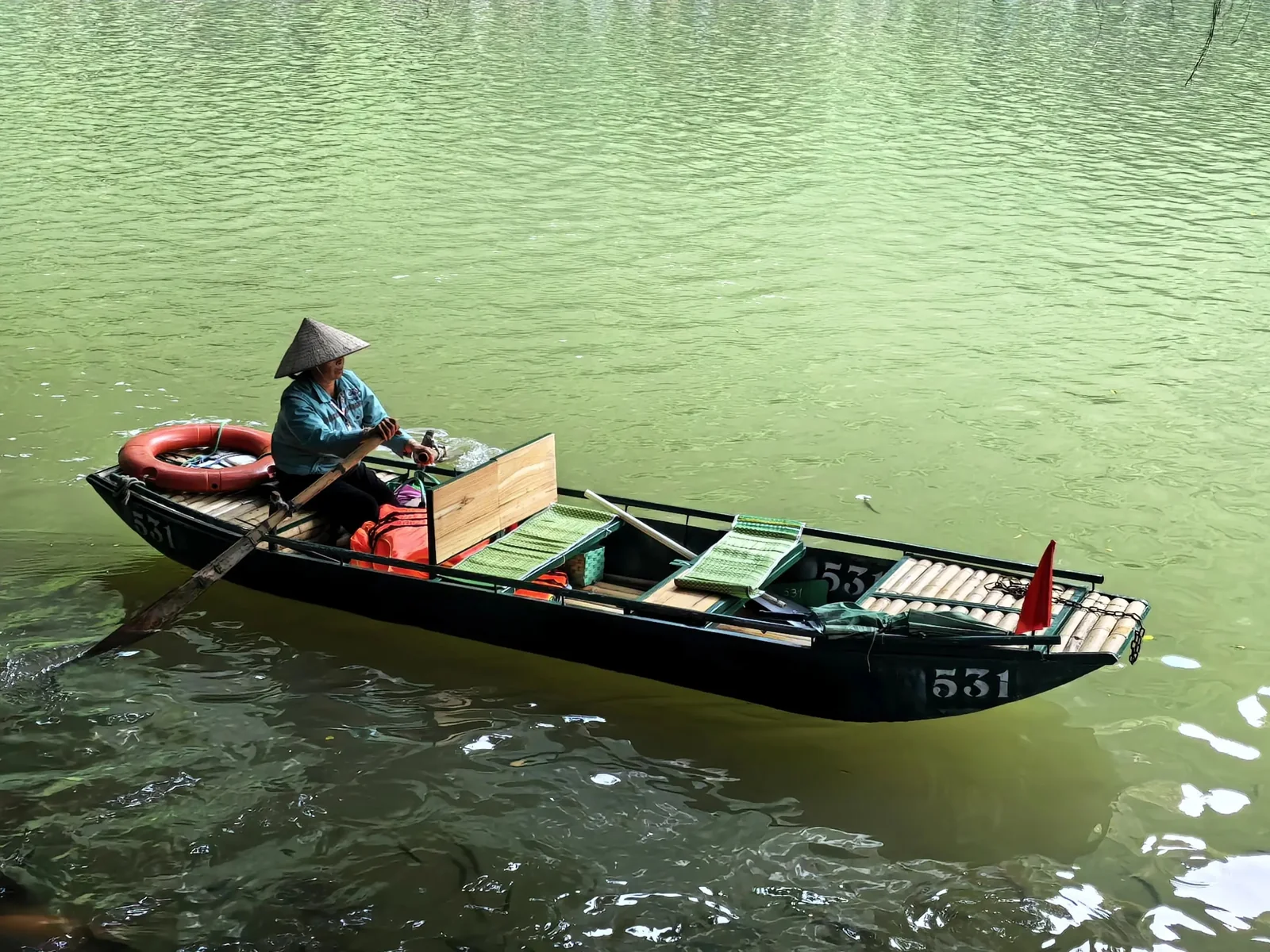
Equally impressive is the physical ingenuity of the local sampan operators. Many boats are piloted by local women in their 60s who seamlessly switch from arm rowing to foot-rowing—reclining back on their wooden seats and propelling heavy oars with rhythmic, effortless foot strokes over kilometers of waterways.
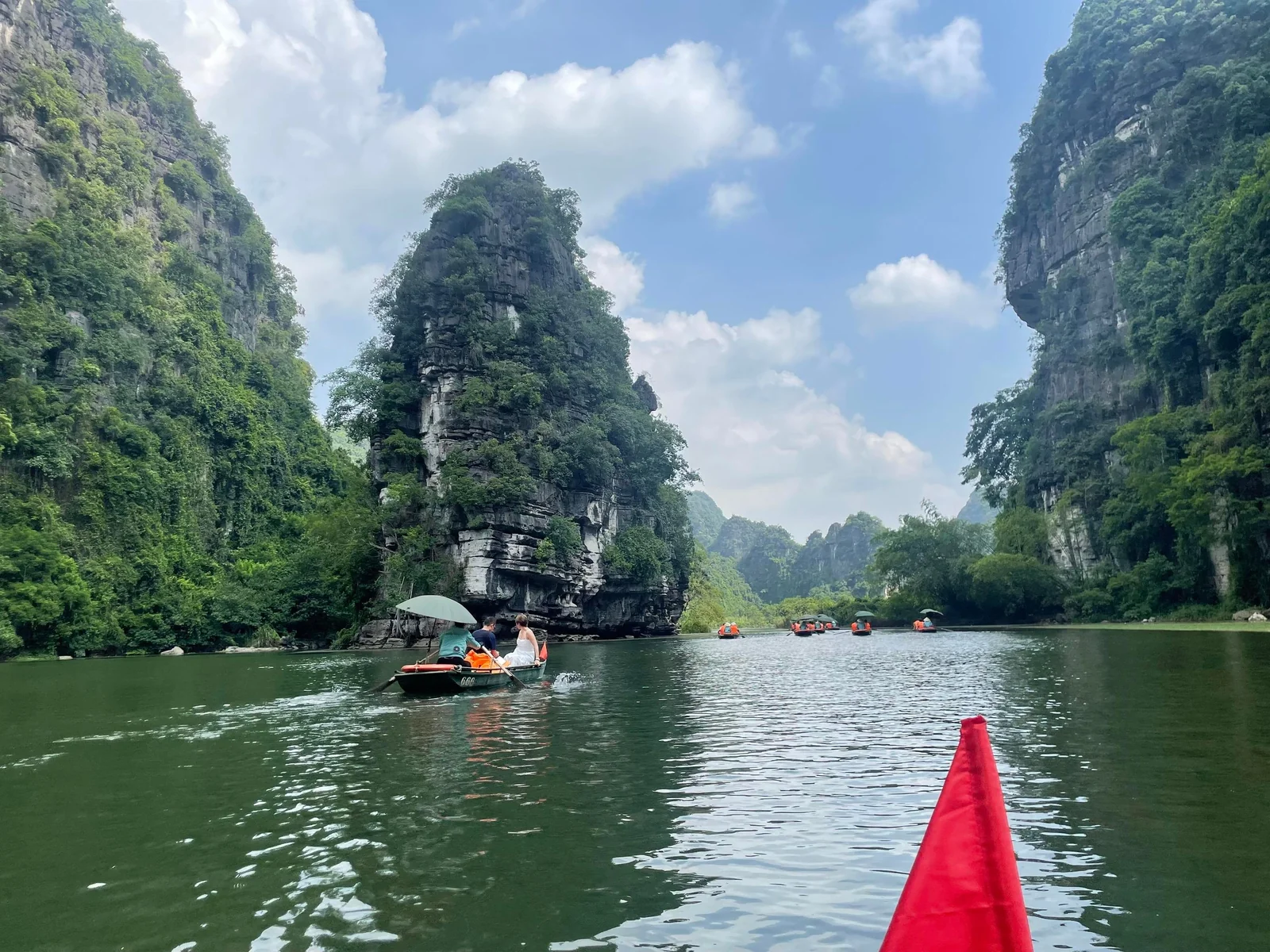
Traditional metal sampans navigating through the sheer karst amphitheaters of Trang An.
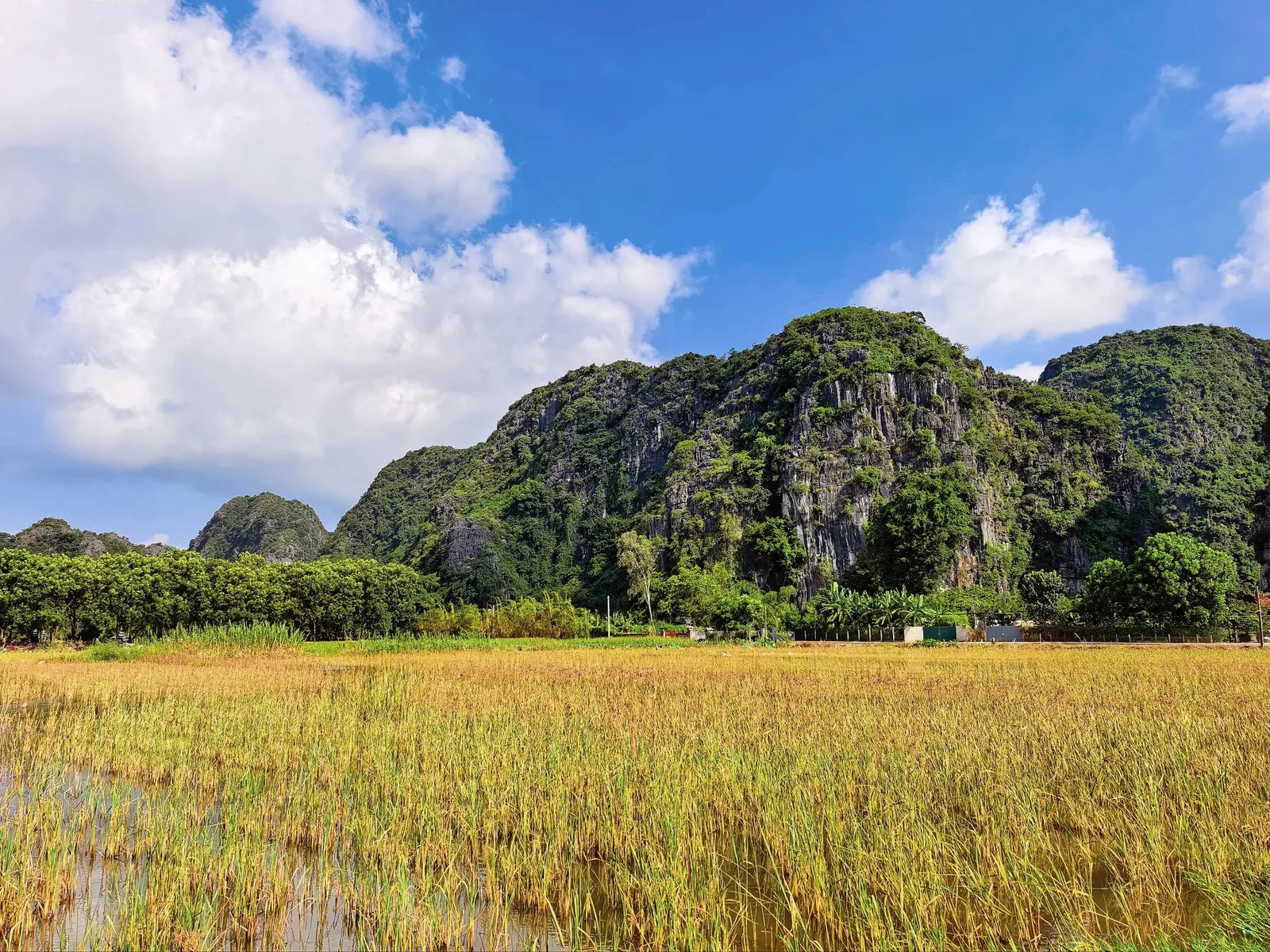
A master of river mobility: a local woman skillfully guiding passengers through limestone waterways using foot-powered oars.
Hang Mua Summit: 500 Steps to Vietnam’s Most Iconic Overlook
The ascent to the stone dragon shrine atop Hang Mua (Mua Cave) is punishing in high humidity. Five hundred uneven, steep stone steps cut into a razor-sharp limestone spine will push anyone’s cardiovascular limits.
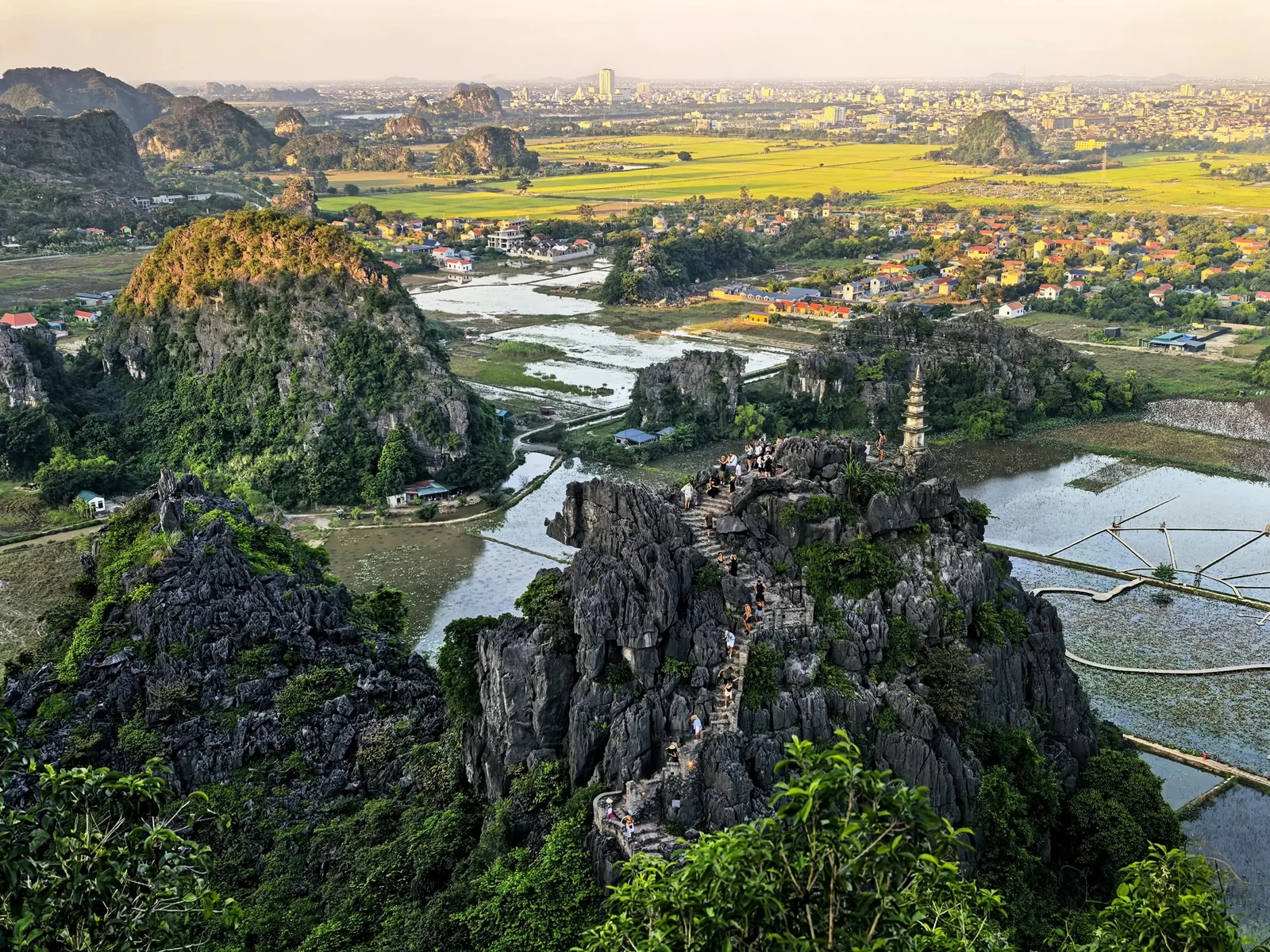
However, the payoff at the ridge crest is unassailable: a 360-degree panorama over the winding Ngo Dong River, where tiny sampans crawl between vertical limestone walls and patchwork rice paddies. For sheer topographic drama, it remains one of the finest viewpoints in all of Southeast Asia.
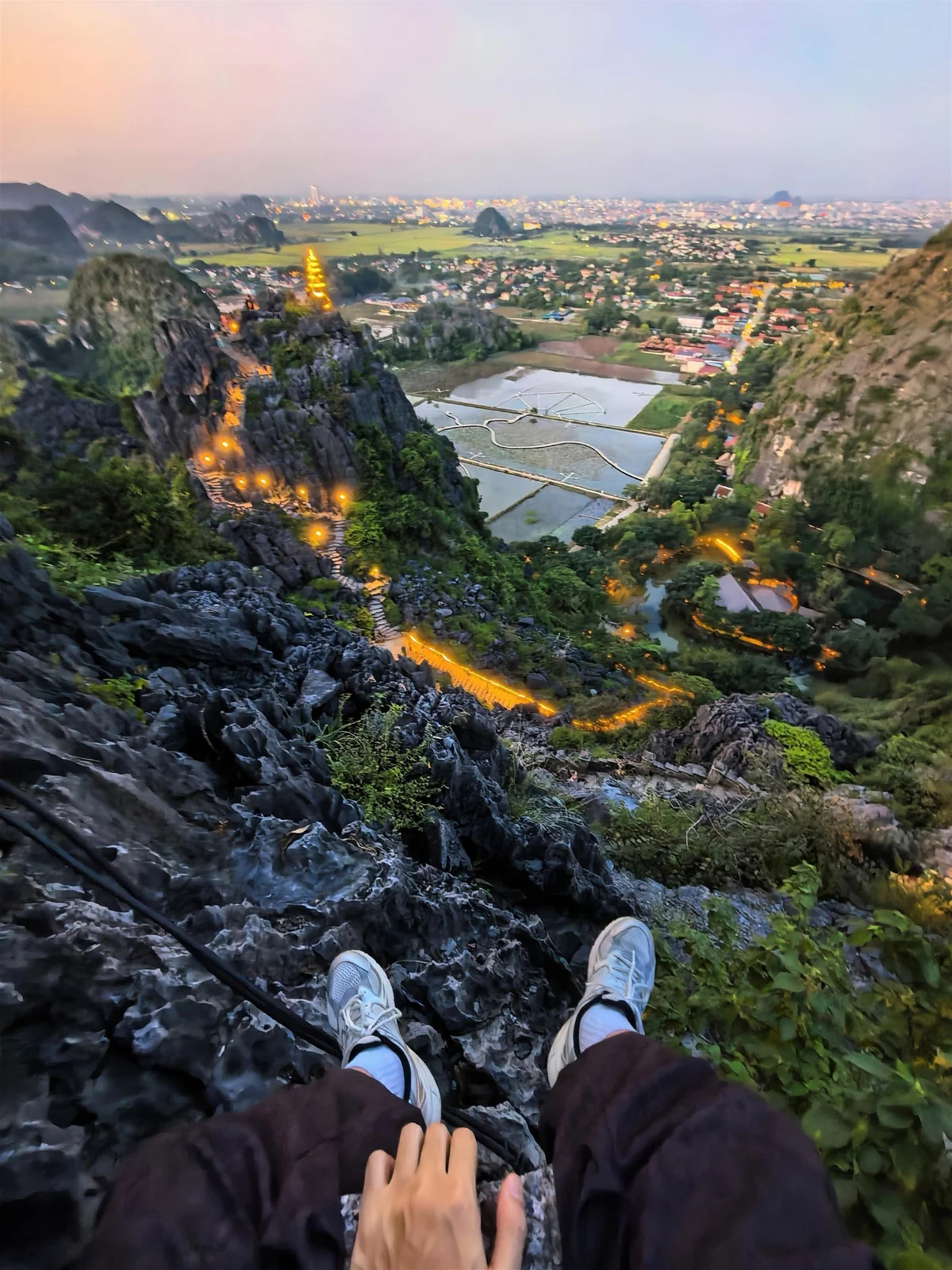
The grueling climb: nearly 500 steep stone steps carved directly into the limestone ridge of Hang Mua.
The summit vista: panoramic view over the Ngo Dong River snaking through Tam Coc karst formations.
The Magic of the Overnight Stay: Tam Coc After 5:00 PM
The single best decision of the trip was refusing the standard Hanoi day tour and booking two nights at a rural homestay in Tam Coc.
At 5:00 PM daily, the fleet of 45-seater tour buses departs back toward the capital. Within thirty minutes, the entire basin undergoes a profound transformation. The noise vanishes, air pollution drops, and the rustic character of rural Vietnam re-emerges.
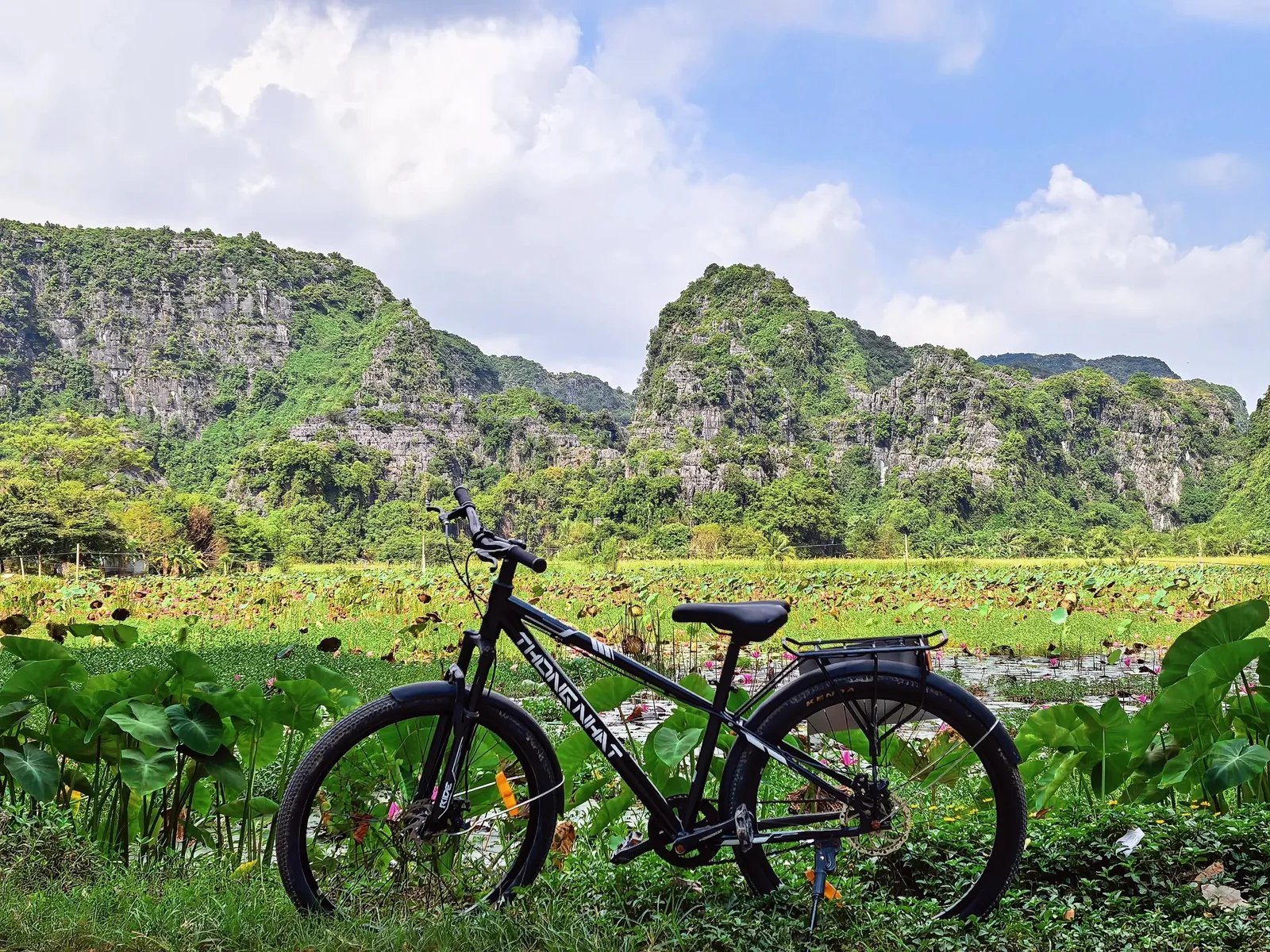
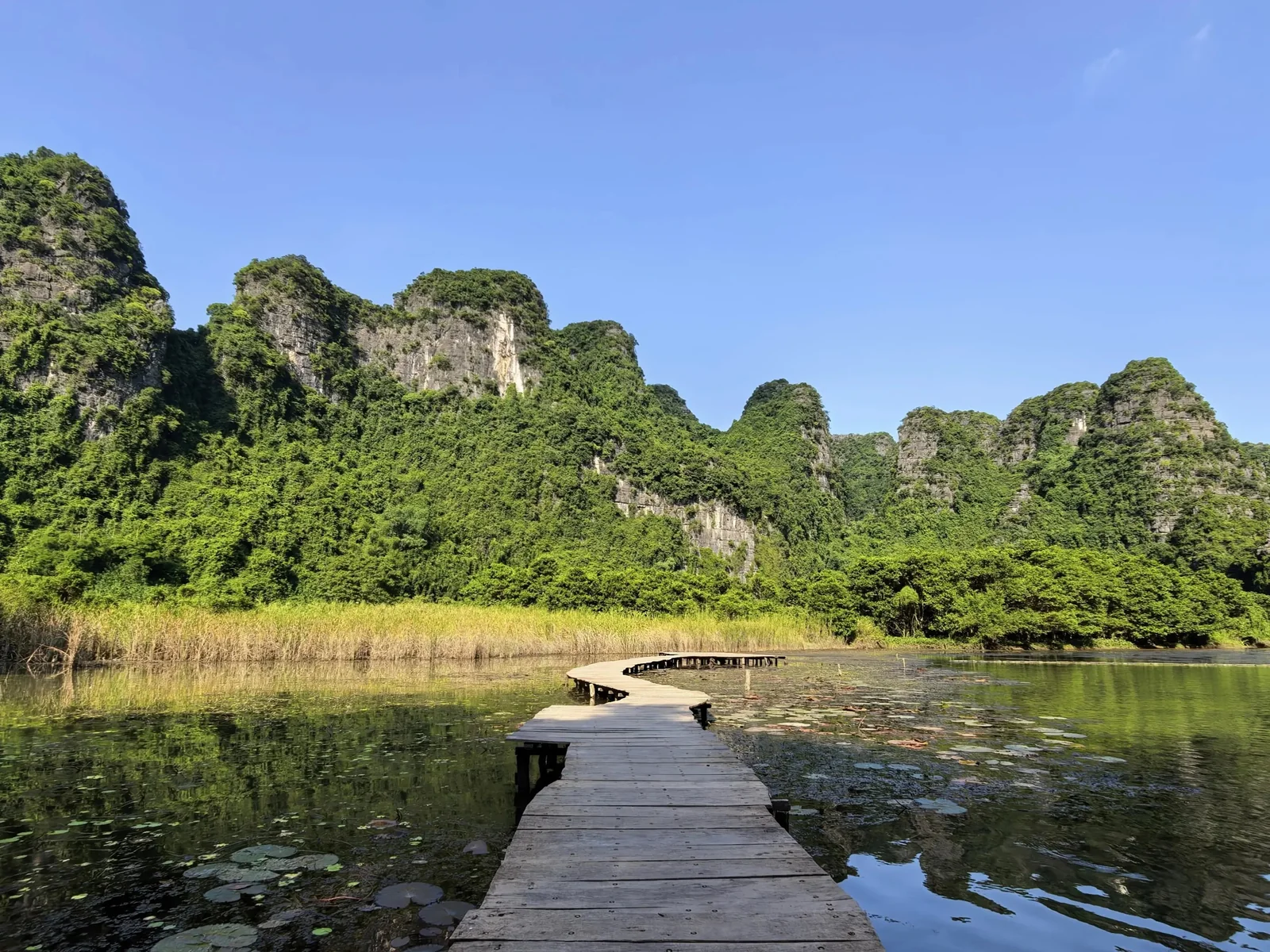
Renting a basic city bicycle for 50,000 VND ($2 USD) allows you to peddle undisturbed down narrow asphalt tracks cutting between lotus wetlands, grazing water buffaloes, and towering cliffs without seeing another tour group for hours.
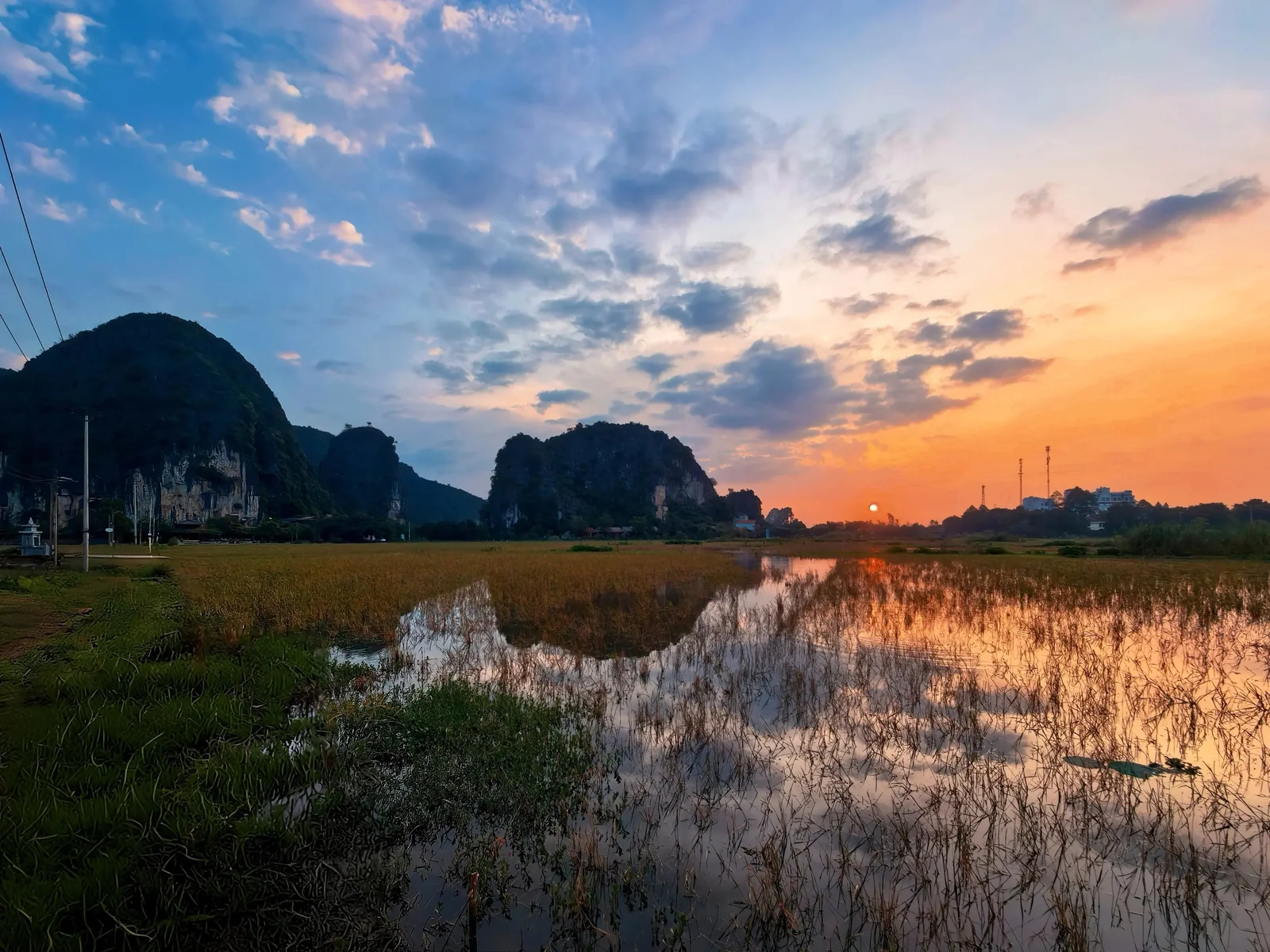
Rural solitude: pedaling through quiet agricultural lanes and lotus ponds once day-trippers return to Hanoi.
Evening calm: village homestays nestled beneath towering karst cliffs offer complete quiet after sunset.
Regional Gastronomy: Mountain Goat & Crispy Rice
Ninh Binh’s regional cuisine stands out distinctly from Hanoi’s street food repertoire:
- Thịt Dê Núi (Free-Range Mountain Goat): Grazing along the steep karst cliffs, local goat meat is exceptionally lean and fragrant, lightly stir-fried with lemongrass and ginger or dipped in fermented soy sauce (tương bần).
- Cơm Cháy (Crispy Scorched Rice): Sun-dried and flash-fried puffed rice crusts topped with savory pork floss (chà bông) and drizzled with a rich scallion goat gravy.
Ninh Binh culinary staples: tender stir-fried mountain goat meat served alongside traditional golden scorched rice (cơm cháy).
2. The Frustrations: Commercial Traps, Crowds & Aggressive Selling
While the natural scenery is extraordinary, travelers must navigate several commercial frictions that can quickly sour the experience if unprepared.
The Saturday Crush: When Nature Becomes a Theme Park
Arriving at Hang Mua at 2:00 PM on a weekend revealed the darker side of overtourism. The narrow stone staircase became a slow-moving human queue in 32°C heat. At the pinnacle dragon sculpture, visitors were forced to wait 20 to 25 minutes in a single-file line just to take a 10-second photograph.
Similarly, midday boat departures at Trang An often feel like water-borne bumper cars. With dozens of sampans bumping hulls, tour leaders shouting through megaphones, and portable Bluetooth speakers echoing across limestone caverns, the spiritual serenity of this UNESCO sanctuary is frequently drowned out.
Midday river traffic: dozens of tourist sampans clustering at cave entrances and river bottlenecks.
Cavern navigation: boats queuing in close proximity to access low-clearance tunnel passages.
Aggressive Floating Vendors & Demanded Tipping at Tam Coc
While Trang An is tightly regulated by provincial authorities with fixed ticket pricing, the Tam Coc boat route still struggles with predatory sales tactics:
- The Turnaround Ambush: Near the final cave turnaround point, 6 to 7 floating vendor boats physically intercept incoming sampans, grabbing gunwales and refusing to release them until tourists purchase high-priced sodas, mangoes, or biscuits for themselves or their rower.
- Aggressive Tipping Pressure: Rather than allowing tipping to remain a spontaneous gesture of gratitude, several rowers began chanting “tip, tip, tip” halfway through the excursion, repeatedly holding out donation boxes before the journey concluded.
Floating retail pressure: vendor boats stationed along the Tam Coc river turnaround point.
The Hanoi Day-Tour Disconnect
Speaking with fellow international travelers at our Tam Coc homestay revealed massive discrepancies in day-tour bookings out of Hanoi’s Old Quarter:
- Identical 1-day bus itineraries varied wildly in price: some paid $35 USD, while others paid $65 USD through hotel booking desks for identical transport.
- Group buffet lunches included in budget day packages were widely criticized: chaotic dining halls with 50+ travelers jostling for lukewarm fried rice and rubbery pork.
- Spending 4.5 hours in transit for only 3 hours on the ground forces travelers into the absolute hottest, most congested hours of the day (11:00 AM – 2:30 PM).
Hoa Lu Ancient Capital: Historic Void
While historically significant as Vietnam’s capital under the Dinh and Early Le dynasties (968–1009 CE), the present-day Hoa Lu Ancient Capital complex often underwhelms independent travelers.
Little of the original 10th-century royal citadel remains; the current commemorative temples date from the 17th century. With virtually no contextual signage in foreign languages and persistent touts selling postcards in the parking lot, it rarely justifies a lengthy detour unless accompanied by a dedicated historical scholar.
Hoa Lu Ancient Capital: reconstructed 17th-century dynastic shrines commemorating emperors Dinh Tien Hoang and Le Dai Hanh.
3. Seasonal Overview & Travel Planning
Ninh Binh’s visual landscape shifts dramatically across the four seasons:
| Season | Months | River & Crop Conditions | Weather Realities |
|---|---|---|---|
| Spring Bloom | February – April | Lush green rice shoots, mist-shrouded karst pinnacles | Cool & humid (18°C–24°C), frequent morning drizzle |
| Golden Harvest (Peak Visual) | Late May – Early June | Tam Coc river turns golden-yellow with ripening rice paddies | High summer heat (32°C–36°C), intense sun, crowded |
| Lotus Season | June – August | Pink lotus wetlands in full bloom across Hang Mua lagoons | Tropical downpours, high humidity, afternoon thunder |
| Dry Winter | November – January | Clear water, dry riverbanks, minimal rainfall | Crisp & cool (15°C–21°C), low water levels, gray skies |
4. Four Essential Field Rules for Visiting Ninh Binh
To experience the world-class magic of Ninh Binh while completely dodging the tourist circus, follow these four field rules:
Rule 1: Never Visit on a Rushed Day Trip
Book at least two nights in Tam Coc or Trang An. This allows you to explore between 6:30 AM – 9:30 AM and 4:30 PM – 7:00 PM, bypassing 90% of all tour bus crowds.
Rule 2: Launch Trang An at 8:00 AM Sharp
The ticket counter opens at 7:00 AM. Arriving by 8:00 AM guarantees calm river mirrors, mist hanging between peaks, and quiet subterranean caverns before the Hanoi coach buses arrive around 10:00 AM. Route 3 (featuring the longest 1,000-meter cave) offers the best balance of natural caves and open water.
Rule 3: Choose Small Group or Private Transport
If traveling from Hanoi, book a Limousine van (9-seater) directly from your accommodation (approx. 180,000–220,000 VND / $8–$9 USD one way) rather than an organized tour bus. It takes under 90 minutes via the highway and drops you directly at your homestay.
Rule 4: Tipping Etiquette
Keep 20,000 to 50,000 VND ($1–$2 USD) in small bills ready. If your boat rower navigates respectfully without demanding money or steering you into vendor traps, handing them this tip directly at the pier is customary and deeply appreciated. If they aggressively demand tips throughout the trip, you are entirely within your rights to decline.
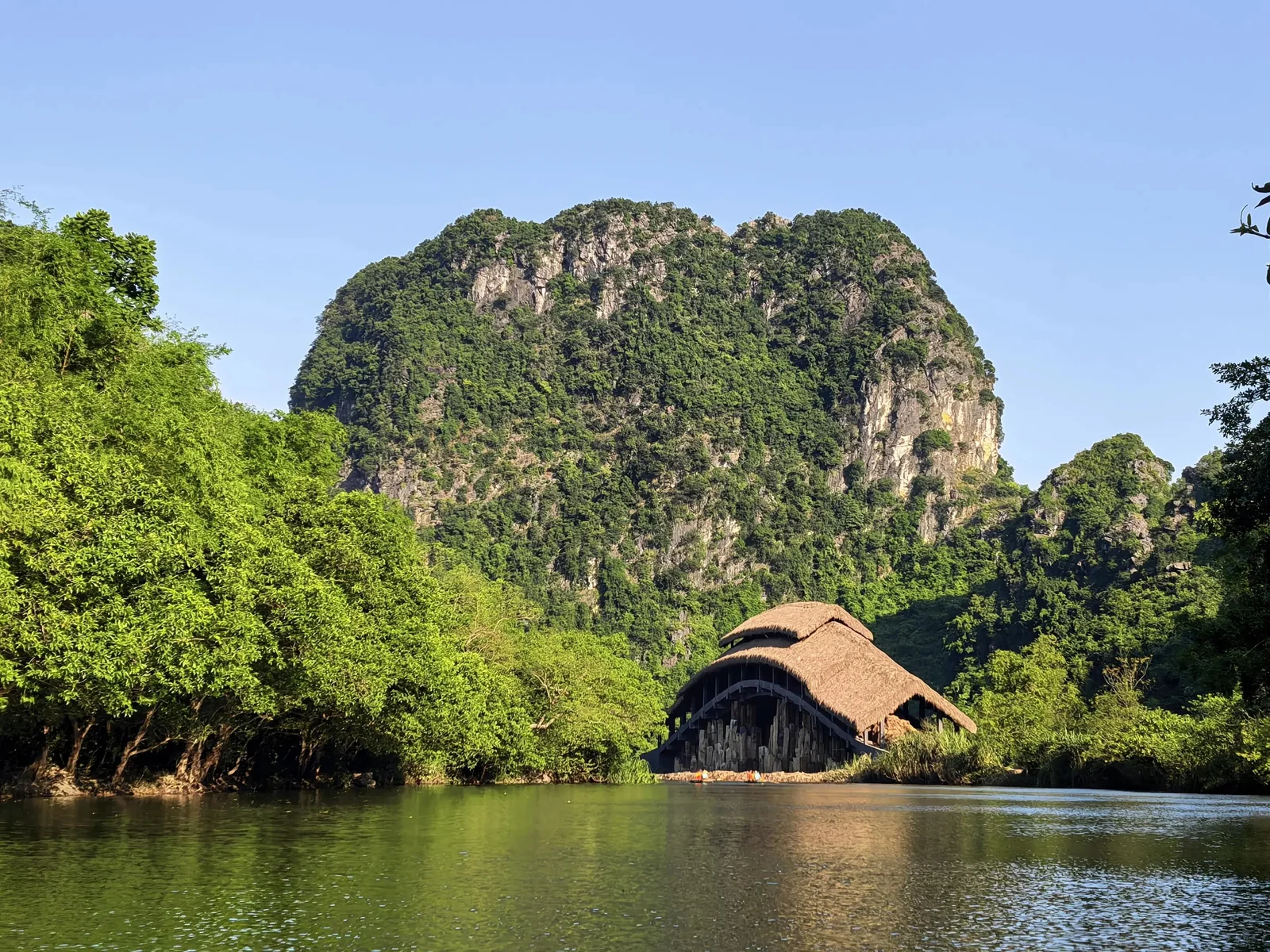
Dusk settling over Ninh Binh: once the day buses depart, the true tranquility of Vietnam’s ancient karst heartland reveals itself.
Editorial Verdict
- Overall Recommendation: 100% Yes. The raw limestone topography is genuinely once-in-a-lifetime.
- The Reality: Ninh Binh is no longer a sleepy, off-the-grid secret; it is an internationally prominent travel hub. Manage your arrival windows, stay overnight, and you will encounter one of the most stunning corners of Asia.