
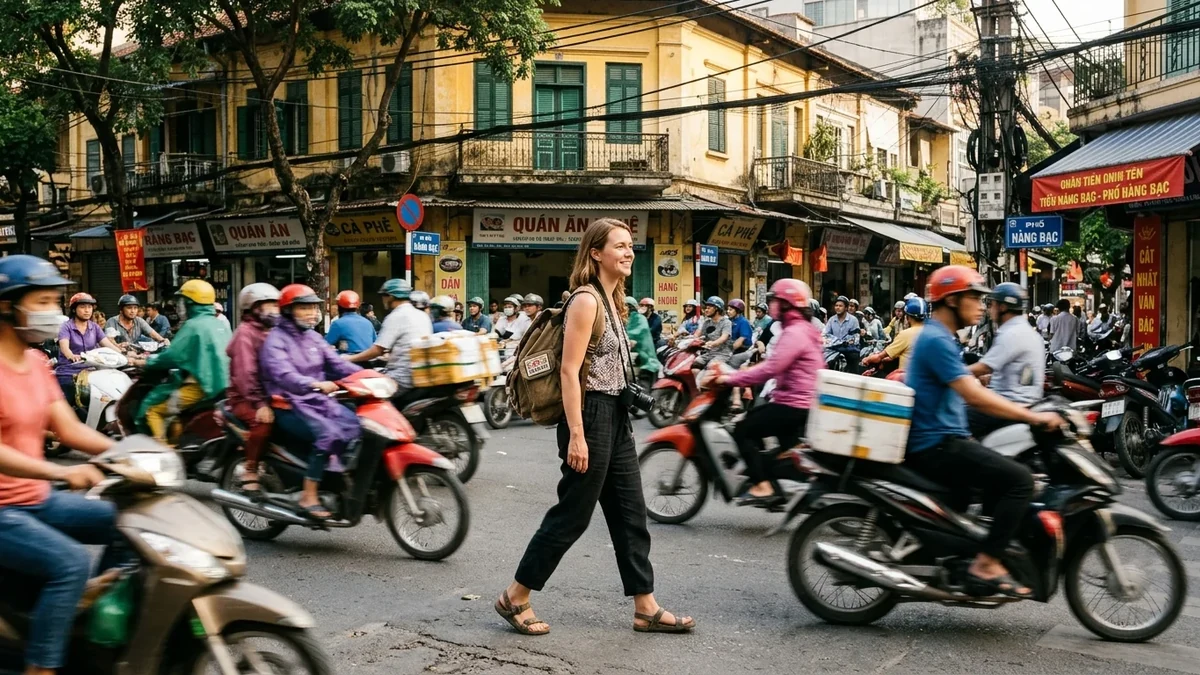

HANOI, Vietnam — If you ask seasoned global travelers or scan international security indices, one consensus stands out immediately: Vietnam is one of the safest countries in the world for foreign visitors.
Violent crime against tourists—such as armed muggings, gun violence, or aggressive assault—is vanishingly rare. The country regularly shares spots in global travel safety rankings alongside Singapore and Japan, backed by a strong community ethos and an active public security presence that keeps city centers calm well past midnight.
Yet, first-time visitors frequently arrive feeling anxious. Why? Because while Vietnam does not threaten your physical safety, it can thoroughly test your patience with everyday friction: chaotic motorbike swarms, opportunistic taxi overcharging, digital booking scams, and the cultural shock of a fast-moving developing nation.
Here is the candid, ground-level truth about staying safe, avoiding common traps, and navigating the real-world travel realities of Vietnam without stress.
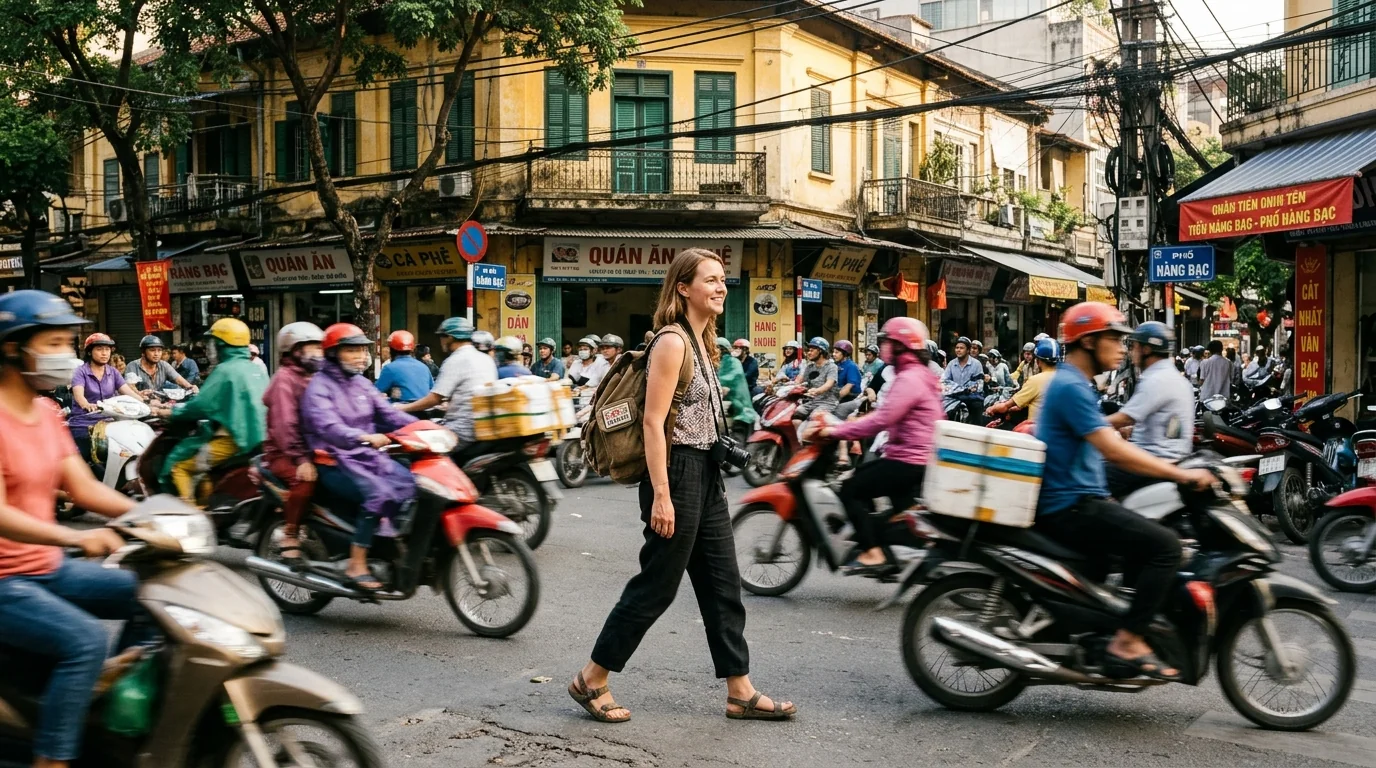
The art of the street cross: walking steadily at a predictable pace allows the incoming flow of motorbikes to steer smoothly around you.
1. Taxis, Phone Snatching, and the Fake Driver Game
The number one complaint among international travelers in Vietnam is not danger—it is petty financial annoyance and opportunistic street theft.
- Street Realities from Recent Travelers: Content creator
@12_nqa, documenting late-night walks across Ho Chi Minh City, noted that while main thoroughfares like Nguyen Hue and Dong Khoi feel completely secure, outer neighborhood alleyways can get dusty and require constant vigilance regarding passing motorbikes. Meanwhile, travel vlogger@shinebrightlikeasunfloweradmitted feeling rattled after a turning scooter clipped her close at a pedestrian green light, on top of enduring a grueling three-hour queue at airport immigration. - The “Fake Driver” Trap: At major airports (Noi Bai and Tan Son Nhat) and nightlife hubs, unauthorized drivers linger outside arrival gates wearing counterfeit lanyards or waving phones claiming to be your pre-booked ride. Once inside their vehicle, they demand inflated flat fares or use rigged meters.
- Opportunistic Drive-By Phone Grabs: While physical muggings do not happen, “drive-by phone snatches” do. A tourist standing right on the curb edge typing on an iPhone 16 is an easy target for a passing scooter rider who can snatch the device and vanish into traffic within seconds.
[!TIP] How to protect yourself:
- Stick strictly to ride-hailing apps: Grab or the electric-vehicle fleet Xanh SM. Never accept rides from anyone approaching you on foot.
- Always match the four-digit license plate and driver photo on your screen before opening the car door.
- Step back at least two meters from the curb when checking maps or waiting for your ride, and hold your phone with both hands.
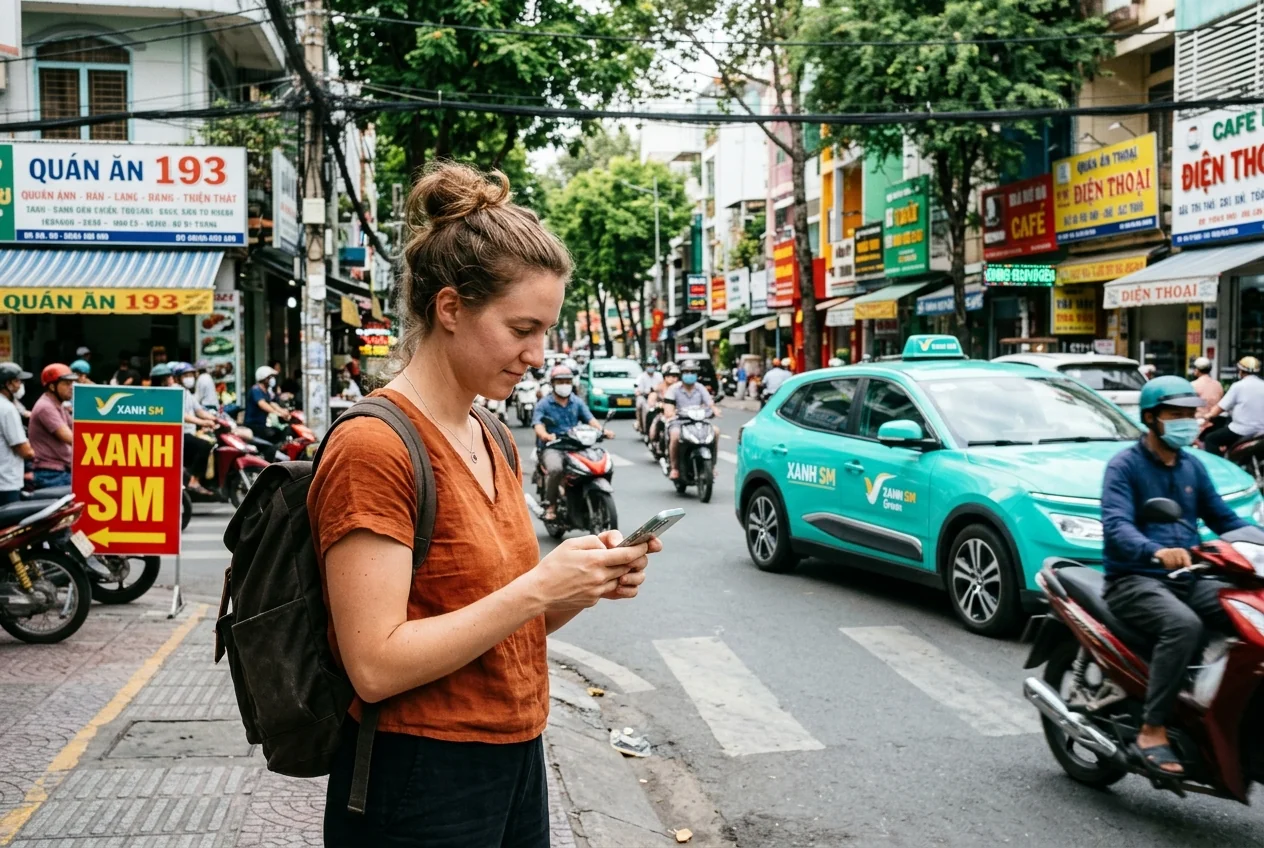
Booking rides through verified apps like Xanh SM or Grab ensures upfront fixed pricing and verified vehicle license plates.
2. Navigating the Motorbike Swarm: The River of Traffic
To anyone stepping out of a Western airport, crossing a major boulevard in Hanoi or Saigon looks like stepping into a blender. Pedestrian crossings exist on paper, but drivers rarely yield to stationary walkers.
However, Vietnamese traffic functions like a fluid river:
- The Golden Rule: Walk slowly, predictably, and with steady momentum. Never run, never hesitate suddenly, and never take a step backward.
- Eye Contact: Glance towards approaching riders so they can gauge your pace. Riders will effortlessly predict your trajectory and steer smoothly behind you.
- Within 48 hours, virtually every traveler transitions from terrified hesitation to gliding across six lanes of two-wheelers like a local.
3. Social Media Booking Traps & The Cash Economy
The newest and most sophisticated travel headache in Vietnam is not street crime—it is digital reservation fraud.
- The Fake Resort Fanpage Wave: During recent travel seasons, organized cyber-fraud rings set up near-identical Facebook fanpages mimicking luxury five-star resorts in Phu Quoc, offering deep discounts to lure direct bank deposits. In one high-profile case investigated by An Giang provincial police, an international traveler was defrauded of $24,300 USD before authorities dismantled the four-person syndicate.
- Midnight Overbooking Headaches: Independent traveler
@ongngoai40t(Miha Day Roi) recently shared a cautionary experience after arriving at JAN Hostel Central Point in Saigon at midnight, only to find the property overbooked with no room available, forcing an extended text-message dispute to recover payment. - Cash Still Rules the Sidewalk: While contactless payment, Apple Pay, and QR codes are ubiquitous in city malls and convenience stores, authentic street food vendors, local fruit stalls, and highland homestays deal exclusively in cash. Keep small denominations (20,000, 50,000, and 100,000 VND) ready.
[!IMPORTANT] Booking Safeguards: Never transfer room deposits through Facebook Messenger or Telegram. Book exclusively through verified platforms like Booking.com, Agoda, or official company domains ending in
.vn.
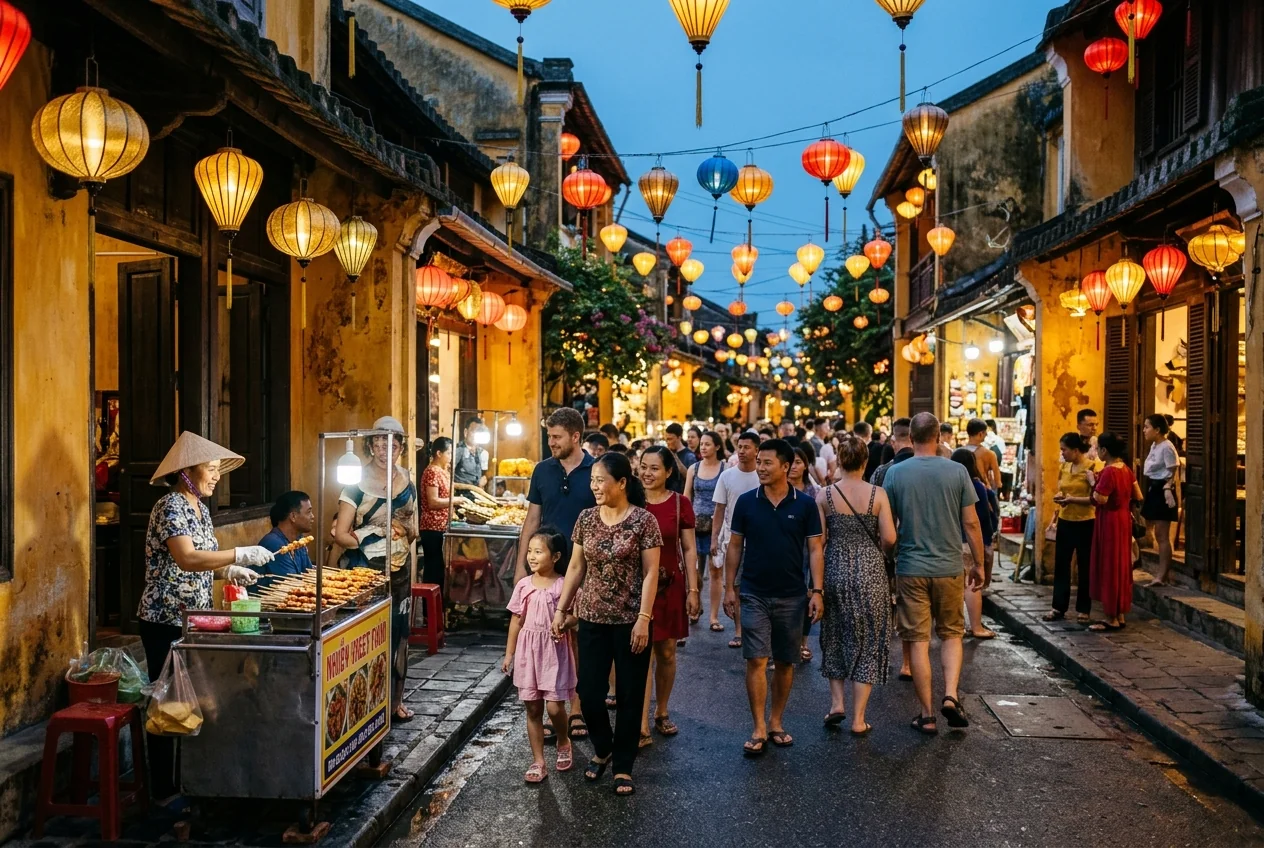
Nightlife in Vietnam remains exceptionally peaceful: lantern-lit streets in heritage towns allow solo travelers to explore comfortably after dark.
4. Resort Realities and Budget Tour Pitfalls
Even when safety is assured, unrealistic expectations can spoil a high-end vacation. Online travel creators have increasingly highlighted the gaps between glossy marketing and on-the-ground conditions:
- Location Quirks: Luxury traveler
@scottnguyen8802praised the exquisite architecture of Azerai Ke Ga, but cautioned that its proximity to traditional fish sauce manufacturing villages resulted in unexpected seasonal flies and thin acoustic isolation between villas. - Property Wear-and-Tear: Content creator Joedy Tran (
@nuocmamafoods) documented her stay at The Shells Resort & Spa in Phu Quoc, pointing out maintenance shortcomings including stained tubs, moldy drapery, and struggling air conditioning after arriving with heavy luggage at an elevator-free wing. - Cheap Highland Tour Operators: Budget traveler
@ngocchauanieeshared her candid booking exchanges with Vietvista Travel on a Ha Giang loop tour, where an unexpected five-hour midday gap left participants without rest accommodations, alongside extra fees for early return transfers.
The lesson here is simple: exceptionally cheap tours cut corners on rest stops and vehicle safety, while coastal resorts near fishing villages often come with authentic local aromas. Read recent reviews rather than relying on promotional photos.
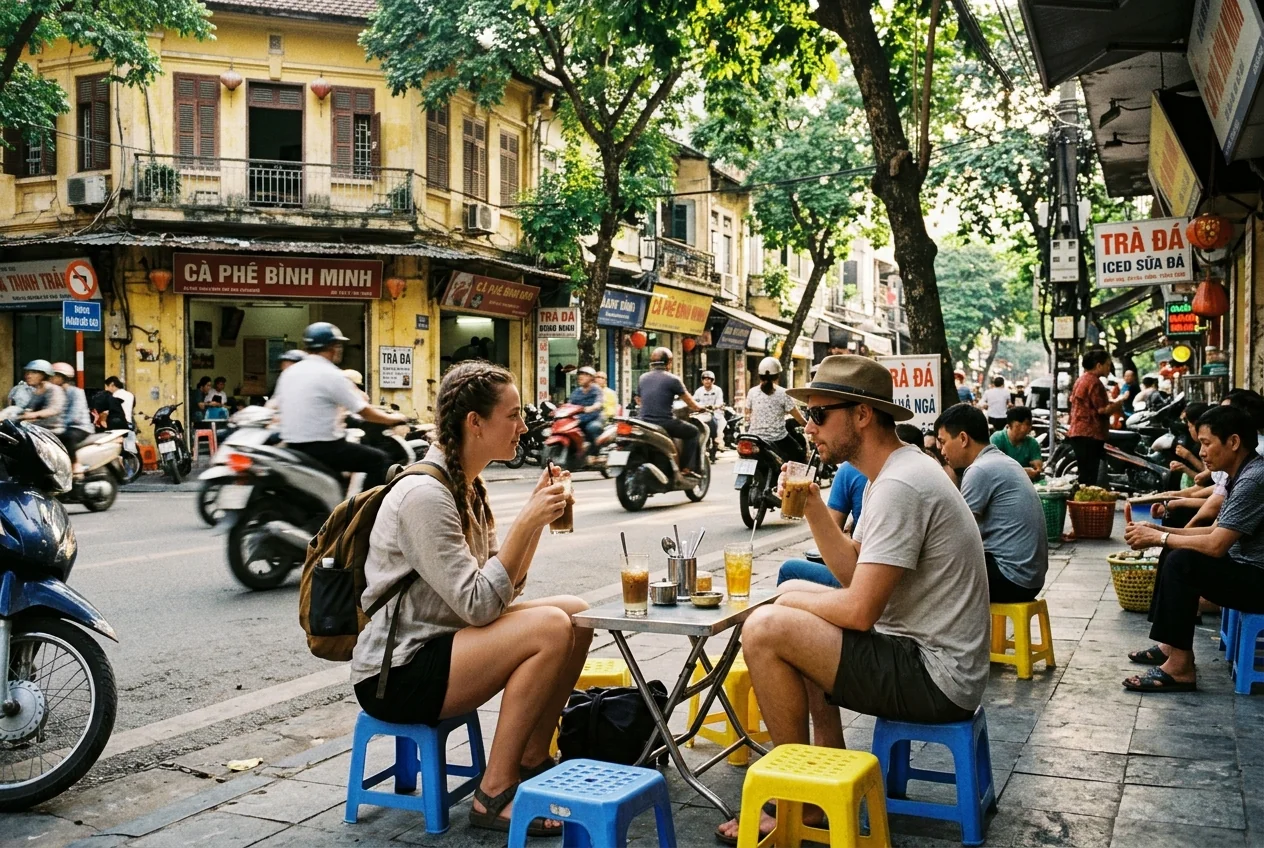
Sidewalk coffee culture: observing city life from low plastic stools while enjoying a glass of traditional cà phê sữa đá.
5. The “Curious Stare”: Understanding Local Reactions
Solo female travelers, visitors with noticeable tattoos, and particularly Black travelers occasionally report being stared at intensely in public plazas, or having smartphones pointed in their direction for discreet photos.
It is essential to understand the cultural context:
- Curiosity, Not Hostility: In provincial towns or non-tourist suburbs, many older locals and young children have simply never encountered travelers of diverse backgrounds in person. The staring is driven by genuine, unvarnished fascination rather than malice, xenophobia, or threat.
- Regional Differences: Major cosmopolitan hubs like Da Nang, Hoi An, and District 1 of Ho Chi Minh City host millions of international guests annually, where travelers of every background blend in seamlessly without attracting a second glance. A warm smile or a simple “Xin chào” almost invariably dissolves curious looks into friendly laughter.
6. The Bottom Line: Should You Worry?
The brief answer is: No.
Vietnam’s travel challenges are almost entirely logistical rather than physical. Once you install Grab, lock in accommodations through reputable channels, keep your smartphone tucked away near busy curbs, and master the steady rhythm of crossing the street, you unlock one of the most rewarding, delicious, and genuinely welcoming destinations on the planet.
With delicious $2 bowls of pho, world-class highland landscapes, and local residents who go out of their way to help lost strangers, it is no surprise that over 90% of international travelers leave already planning their return.